
That west-facing living room can feel comfortable at breakfast and unbearable by midafternoon. If you are researching how to tint house windows, the goal is usually simple: cut the heat and glare without giving up the natural light you enjoy. The right window film can also protect furniture, flooring, artwork, and window treatments from UV exposure while adding a measure of daytime privacy.
Residential tint is not a one-size-fits-all job, though. Your glass type, window direction, existing coatings, and the results you want all affect which film is safe and worth the investment. Here is how to make a smart choice before film ever touches the glass.
Start With the Problem You Want to Fix
Window tint can solve several issues at once, but it works best when you prioritize the one that bothers you most. If a room gets hot every afternoon, solar heat rejection should lead the conversation. If sunlight washes out a television or computer screen, glare reduction may be the bigger need. If your concern is faded hardwood, upholstery, or merchandise, look for strong UV protection.
Privacy works a little differently. Reflective and darker films can make it harder to see into your home during daylight hours. At night, when interior lights are on, the effect can reverse. A privacy film may still be useful, but it is not a replacement for blinds, curtains, or shades in rooms where nighttime privacy matters.
Make a quick note of the windows causing problems, when the problem happens, and what is behind the glass. That gives you a much clearer starting point than choosing a film based only on how dark it looks in a sample.
Check Your Windows Before Choosing Film
The biggest mistake homeowners make is assuming every window can take every film. Glass absorbs solar energy. A film that is too dark or too heat-absorbing for a particular window can raise the glass temperature and increase stress on the pane or seal.
This is especially relevant for insulated double-pane windows, older units with worn seals, large panes, and windows with existing low-emissivity, or Low-E, coatings. Tempered glass, annealed glass, laminated glass, and factory-tinted glass can all have different film recommendations. The manufacturer warranty may also have specific language about aftermarket film.
Before you buy anything, find the window manufacturer information if it is available. Look for etched markings near a lower corner of the glass, paperwork from the installation, or records from the previous owner. If you cannot identify the glass, a professional tint consultation is the safer move. A reputable installer can assess the window, recommend a compatible product, and explain the warranty in plain language.
Choose the Right Residential Window Film
Not all window film is meant to make a home look dark. Modern residential film options range from nearly clear heat-control films to decorative privacy films with a frosted finish.
Solar-control film for heat and glare
Solar-control film is the go-to choice for sunny Knoxville rooms, home offices, and spaces with large exposed windows. These films reject a portion of solar heat and reduce glare while still allowing visible light indoors. The amount of light that remains is usually described as visible light transmission, or VLT. A lower VLT means a darker appearance.
For most homeowners, the best choice is not the darkest film. It is the film that delivers meaningful heat reduction while keeping the room bright enough to feel like home. Ceramic and infrared-rejecting films are often a strong fit because they can manage heat without relying entirely on darkness or a highly mirrored look.
UV-protection film for interiors
Quality window film blocks up to 99% of UV rays, which helps slow fading on floors, sofas, rugs, art, and retail displays. It will not stop fading completely because visible light and heat also play a role, but it can make a real difference in rooms with long daily sun exposure.
A clear or lightly tinted UV-focused film is a smart option when you want protection without changing the look of the glass much. This is common in homes with scenic views, historic design details, or homeowner association rules that limit exterior changes.
Privacy and decorative film
Frosted, patterned, and opaque films are practical for bathroom windows, sidelights, garage windows, interior office glass, and street-facing areas. They add privacy without closing off the light. Decorative film can also give plain glass a finished look at a fraction of the cost of replacing the window.
For exterior-facing privacy, be honest about when you need coverage. A mirrored daytime privacy film can look sharp and help during the day, but window coverings still matter after dark.
Safety and security film
Safety film is thicker than standard solar film and is designed to help hold broken glass together. It can be useful around entry doors, sidelights, vulnerable ground-level windows, or commercial spaces. It does not make glass unbreakable, and it should not be marketed as a complete security system. Still, it can reduce the hazard and mess created by shattered glass.
How to Tint House Windows: The Installation Process
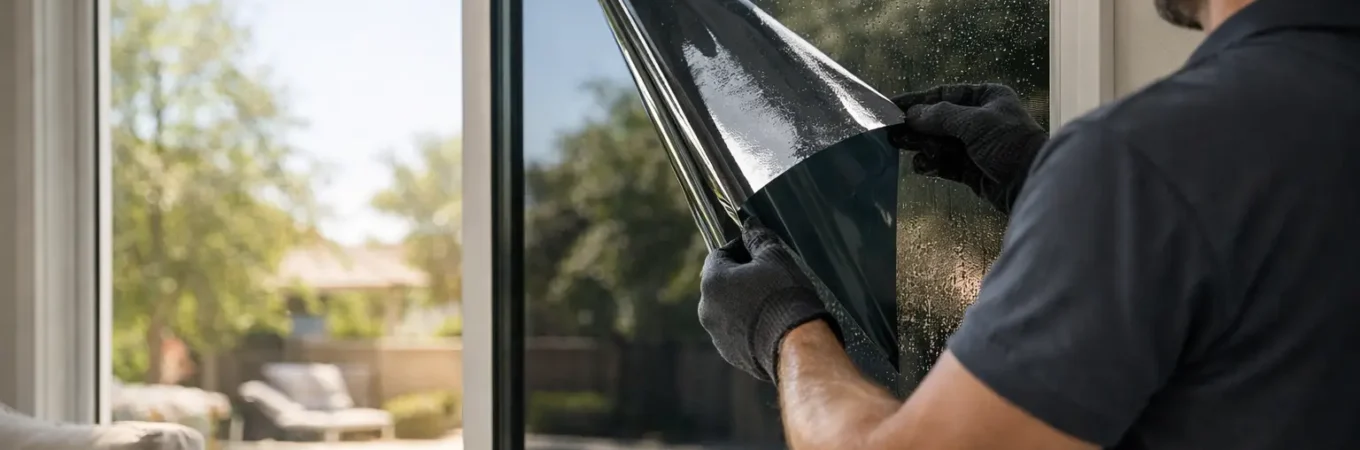
Professional installation is straightforward, but the preparation is where quality shows. The glass has to be thoroughly cleaned, including the edges and corners where dust hides. The film is measured and cut precisely, then applied with a mounting solution that allows the installer to position it before squeegeeing out water and air.
A clean installation should have straight edges, consistent coverage, and no obvious contamination trapped beneath the film. Small water pockets or a slightly hazy appearance can be normal while the film cures. Depending on film type, weather, and humidity, curing can take several days or longer. Do not judge the final appearance the same afternoon it is installed.
For homeowners considering a do-it-yourself kit, the basic process sounds simple: clean, measure, cut, apply, and squeegee. In real homes, it gets harder fast. Large panes, divided windows, textured frames, dust, trim, and film shrinkage all create opportunities for wasted material. A small bathroom window may be a reasonable DIY project. A wall of sun-facing double-pane glass is generally not the place to learn.
Professional installation also gives you access to better film choices, cleaner edge work, and guidance on glass compatibility. At 865 Tint, the focus is helping property owners choose a film that fits the room and the window, not just selling the darkest option.
Avoid These Common Window Tinting Mistakes
Do not choose film based only on a photo or a tiny swatch. Film can look much darker on your actual glass than it does in a showroom sample, especially when the room is shaded or the exterior is bright. Ask to view samples against a similar window and step outside to see the exterior appearance.
Avoid applying residential film over dirty glass or during a rushed cleanup. Dust, pet hair, hard-water spots, and leftover adhesive can remain visible under film. Also, do not assume more reflection equals better performance. Highly reflective film may be effective for sun control, but it can change your home’s exterior appearance and may not fit neighborhood rules.
Finally, do not ignore manufacturer guidance. The wrong film on the wrong insulated glass unit can create expensive problems that outweigh any energy savings. If a window has a cracked pane, seal failure, or moisture between panes, address that issue before tinting.
Care for Tinted Windows After Installation
Once the film has cured, maintenance is easy. Use a soft microfiber cloth and a gentle, ammonia-free cleaner. Avoid abrasive pads, razor blades, and harsh chemicals that can scratch the film or wear down its surface.
If you have blinds or shades that rub against the glass, check that they move cleanly. In most cases, quality film is built for everyday life, but repeated scraping from damaged hardware can mark any finished surface. Keep your installation paperwork so you know the film type and warranty terms if you need service later.
Is House Window Tint Worth It?
For the right home, yes. Window film is often a more affordable alternative to replacing otherwise sound windows, especially when the issue is concentrated in a few sunny rooms. It can make a home office easier to use, reduce hot spots near windows, protect interior finishes, and make bright rooms more comfortable throughout the day.
The payoff depends on the film, the glass, and the exposure. A shaded north-facing window will not see the same benefit as a large west-facing window that gets direct afternoon sun. Start with the rooms that create the most frustration, choose a film that is safe for your windows, and let comfort – not darkness alone – guide the decision.