
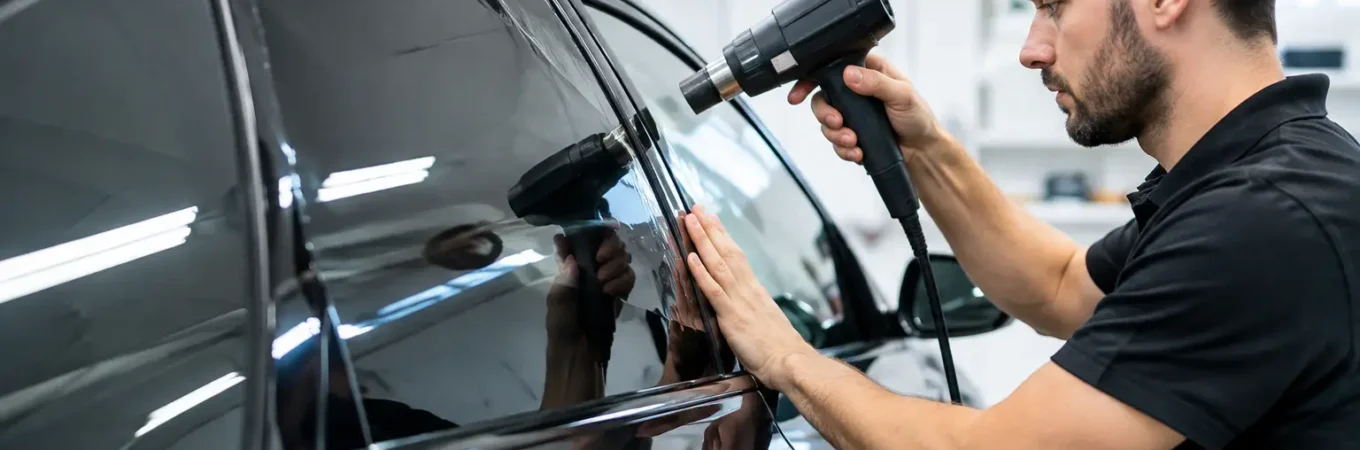
Fresh window tint can look a little different than the finished result you expected when you first pick up your vehicle. A light haze, tiny water pockets, or a slightly streaky appearance can all be part of the tint curing process. That does not mean the installation failed. It means the mounting solution used to position the film is still drying out between the glass and the tint.
For Knoxville drivers, patience is the biggest part of getting a clean, long-lasting finish. East Tennessee heat, humidity, rain, and colder mornings can all affect how quickly window film dries. Knowing what is normal after installation helps you protect your investment and recognize when it is time to ask your tint shop a question.
How the Tint Curing Process Works
Professional window film is installed with a slip solution that allows the installer to position the film precisely and squeegee it flat against the glass. Most of that solution is pushed out during installation, but a small amount remains under the film. It needs time to evaporate through the edges of the tint.
As that moisture leaves, the adhesive continues bonding to the glass. This is why a window may look perfectly clear on day one, then show some temporary cloudiness in certain light a day or two later. Curing is not just about the film looking better. It is the period when the adhesive reaches the stable bond needed for a smooth, durable result.
For most automotive tint jobs, the visible curing period is often a few days to a couple of weeks. Warm, sunny conditions generally help. Cool temperatures, high humidity, and frequent wet weather can slow things down. Thicker films and some high-performance ceramic options may also take longer to settle completely than a basic dyed film.
The same principle applies to residential and commercial film, although larger panes can cure differently because of glass thickness, indoor temperatures, and how much direct sun the windows receive. A sunny storefront may clear faster than a shaded office window, while a home with heavily shaded windows may need extra time.
Why New Tint Can Look Hazy or Have Water Pockets
The most common concern after tint installation is a hazy or milky look. This is usually trapped moisture, not trapped air. As the moisture evaporates, the haze fades and the film becomes clearer.
Small water pockets can also be normal, especially around the edges or in areas that receive less sun. They should gradually shrink as the film cures. You may notice a faint pattern that looks like tiny dots, ripples, or a slight distortion when looking closely through the glass. Again, this is often temporary during the early drying period.
Actual air bubbles are different. Air bubbles tend to keep a distinct rounded shape and do not change much over time. Debris under the film also looks different from moisture. A small speck or fiber will remain in the same spot after curing, while moisture marks typically improve day by day.
No professional installer can promise that every window will look identical within 24 hours. Glass shape, defroster lines, dot matrix areas, weather, and film type all play a role. What matters is the trend. If the appearance is steadily improving, the curing process is doing its job.
How to Care for Tint While It Cures
The simplest rule is also the most important: do not roll down your windows until your installer says it is safe. For most vehicle installations, keeping windows up for at least two to four days prevents the lower edge of the film from catching on the window seal before the adhesive has bonded fully.
Avoid cleaning the inside of tinted glass right away. Give the film time to cure before using glass cleaner, towels, or a scraper near the edges. When it is time to clean, use an ammonia-free cleaner and a soft microfiber towel. Ammonia can be hard on window film over time, and rough paper towels can leave lint or create unnecessary friction.
You do not need to park your vehicle in direct sunlight all day to force the tint to dry. Normal exposure to daylight and regular driving are enough. Heat can speed up drying, but extreme efforts to bake the vehicle in the sun are not necessary. The goal is steady curing, not a rushed cure.
A few practical habits make a difference during the first week:
- Keep the windows rolled up unless your installer provides different instructions.
- Do not pick at the film edges or press on water pockets.
- Wait to clean the inside glass until the tint has had time to bond.
- Use only ammonia-free cleaner after the film is cured.
If you have a windshield strip or full windshield tint where legal and appropriate for your vehicle, follow the same advice. Avoid aggressively wiping the inside glass during the early curing period, especially near the film edges.
When to Be Patient and When to Call Your Tint Shop
Most early changes are normal. Haze that comes and goes, small moisture pockets, and a slight soft look in the first several days are usually signs that water is still evaporating. The answer is usually time.
Call your installer if you see a large bubble that is growing, an edge that is lifting, a crease in the film, or a section that looks unchanged well beyond the expected curing window. You should also reach out if you accidentally roll a window down too soon and the tint catches on the seal. Addressing a concern early gives the shop the best chance to evaluate it fairly and make things right if needed.
Good tint shops want customers to ask questions. A quick photo and a clear description of when the tint was installed can help determine whether what you are seeing is normal moisture or something that needs attention. Do not try to cut, puncture, or push out a bubble yourself. That can turn a simple inspection into damaged film.
Film Choice Can Affect Curing and Long-Term Results
The tint curing process may look similar across film types, but the film you choose still matters long after the water has dried. Carbon film is a practical choice for drivers who want privacy, glare reduction, and a clean appearance at an affordable price. Ceramic film offers stronger heat rejection and can help keep the cabin more comfortable without interfering with common electronic signals.
Higher-end ceramic options are especially appealing for Knoxville summers, when parked vehicles can heat up quickly and daily commutes mean long exposure to sun. They typically cost more upfront, but better infrared heat rejection, UV protection, and color stability can make the upgrade worthwhile for many drivers.
For homes and businesses, the right film depends on more than shade. Some property owners want daytime privacy. Others need glare control in a living room, office, or storefront. Heat reduction and UV protection can help protect flooring, furniture, displays, and interior finishes. A professional recommendation should account for the glass, the direction the windows face, and how the space is used.
A Clear Finish Is Worth the Wait
New tint is one of those upgrades that looks better with a little patience. Give the film the time and care it needs, then enjoy the privacy, reduced glare, UV protection, and cooler feel it was installed to provide. If something does not look right after the expected curing period, 865 Tint is ready to give you a straightforward answer and help you protect the finished look of your vehicle or property.