A good tint job should still look good after a Tennessee summer, not just when it leaves the shop. That is the real question behind a carbon film performance review: does carbon tint deliver enough heat control, privacy, and long-term appearance to justify the upgrade over basic dyed film?
For many Knoxville drivers, the answer is yes. Carbon window film sits in a practical middle ground. It gives your vehicle a darker, cleaner look with better heat performance than entry-level film, without reaching the price of top-tier ceramic options. It is a strong choice for drivers who want a noticeable daily improvement and a finish that holds up.
Carbon Film Performance Review: What You Actually Get
Carbon film uses carbon particles to help manage solar heat and reduce glare. Unlike basic dyed tint, which primarily darkens the glass, carbon film is designed to reject more heat before it enters the cabin. You will feel the difference most on sunny commutes, after your vehicle has been parked outside, and when the afternoon sun hits from the side.
The improvement is real, but it helps to set the right expectation. Carbon tint will not make a black truck parked in direct July sun feel like it was stored in a garage. What it can do is reduce the intensity of the heat, make the cabin more comfortable sooner, and take pressure off your air conditioning system.
It also blocks harmful UV exposure that can fade upholstery, dry out leather, and wear down interior trim over time. That protection matters in East Tennessee, where a vehicle may spend plenty of time in open parking lots, driveways, job sites, and school pickup lines.
A Cleaner Look Than Basic Dyed Tint
Appearance is one of carbon film’s biggest selling points. Quality carbon tint has a rich, neutral black finish that works well on nearly any vehicle, from a daily-driver sedan to a lifted truck or a newer SUV. It avoids the overly shiny or purplish look that lower-quality dyed films can develop as they age.
That color stability matters. Window tint is supposed to make a vehicle look finished, not become another maintenance problem a few summers later. While the quality of the film and the installation both matter, carbon is generally a better long-term appearance choice than the cheapest tint options.
The final look still depends on the shade you choose and where the tint is installed. A lighter legal shade can look clean and factory-like, while a darker rear section adds privacy and a more customized style. A professional installer can help you choose a shade that matches your goals while staying within applicable tint laws.
Heat Reduction: Better Than Dyed, Below Ceramic
Carbon film earns its place because it provides useful heat rejection at a price many drivers are comfortable with. If you are upgrading from no tint or basic dyed tint, the difference is usually easy to notice. Less glare, less harsh sun on your arm, and a cabin that does not feel quite as punishing after sitting outside are all part of the experience.
Ceramic film, especially ceramic IR and premium ceramic ultra options, is still the stronger choice when maximum heat rejection is the priority. Ceramic technology is built for drivers who want the best possible infrared heat control, often without needing an extremely dark shade. If you spend long hours driving, have a dark interior, or simply hate getting into a hot vehicle, ceramic may be worth the extra investment.
Carbon makes more sense when you want solid comfort and a sharp look without paying for the highest-performing film tier. It is not a compromise in workmanship. It is a different value decision.
Where Carbon Tint Fits Best
Carbon tint is a great fit for many everyday vehicles around Knoxville. It works especially well for commuters, students, families, truck owners, and drivers who want privacy and a cooler-looking vehicle without going all the way to premium ceramic.
It is also a smart choice when you are tinting multiple windows and need to stay within a set budget. A full sides-and-rear package in carbon film can provide a major visual upgrade while giving passengers more privacy and helping protect the interior. For a two-window package, carbon is a noticeable step up for drivers who mainly want to cut glare and improve the appearance of the front doors.
There are situations where we would point you toward ceramic instead. If you drive for work all day, regularly park in direct sunlight, have a baby or young passengers in the back seat, or are very sensitive to heat, the added performance of ceramic IR can be money well spent. The right film is the one that fits how you actually use your vehicle, not simply the one with the highest price tag.
Signal Compatibility and Everyday Use
One benefit of carbon film is that it does not create the same signal concerns associated with some older metallic window films. Quality carbon tint is a dependable option for vehicles using Bluetooth, GPS, cell service, keyless entry, and other everyday electronics.
That does not mean every tint product is identical. Film construction, vehicle glass, antenna placement, and electronics can vary. But carbon is widely chosen by drivers who want upgraded performance without worrying that their tint choice will interfere with normal vehicle use.
It also provides strong glare reduction. This is useful during sunrise and sunset drives, on wet roads, and when headlights reflect in mirrors at night. Tint cannot replace safe driving habits or sunglasses when needed, but a well-chosen shade can make the road easier on your eyes.
What Determines Whether Carbon Film Lasts
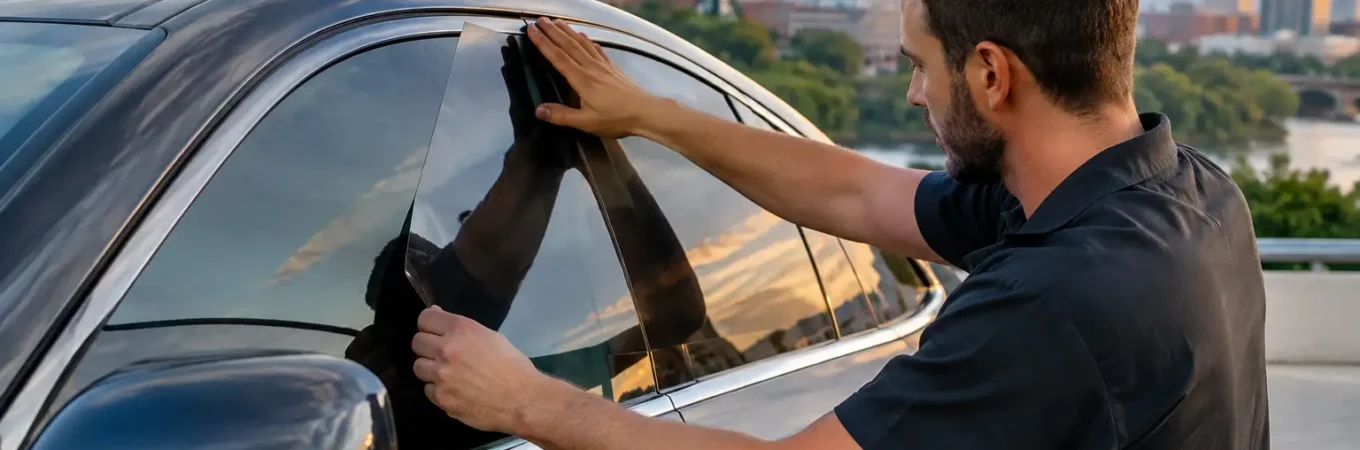
The film itself matters, but the installer matters just as much. Even good carbon tint can look poor if it is cut carelessly, contaminated during installation, or rushed around window seals and defroster lines. Clean edges, proper heat shrinking, and careful preparation make a visible difference.
After installation, it is normal to see a light haze or small water pockets while the film cures. This is part of the drying process and should improve as moisture evaporates. Avoid rolling down newly tinted windows until your installer says it is safe, and use ammonia-free glass cleaner afterward.
A professional installation should also account for the specific vehicle. Curved rear glass, tight door seals, frameless windows, and older vehicles can all require extra care. The goal is not just a dark window. The goal is a clean, damage-free result that looks right from every angle.
Carbon Film vs. Other Tint Options
Basic dyed film is generally the lowest-cost option. It can provide privacy and a darker appearance, but it typically offers less heat control and may be more likely to fade over time. It can make sense for a short-term budget project, but it is not usually the best long-term value.
Carbon film is the practical upgrade. It improves heat rejection, maintains a more stable black appearance, and offers dependable everyday performance at a reasonable price. For many drivers, it is the sweet spot.
Entry ceramic and ceramic IR films move further into comfort performance. They are designed to reject more infrared heat and can be especially valuable on windshields and front windows where shade restrictions may limit how dark you can go. High-end ceramic ultra film is for drivers who want the strongest available heat control, premium clarity, and long-term performance.
There is no one film that is right for every vehicle. A work truck that spends the day outdoors may justify ceramic. A family SUV may benefit from carbon on the sides and rear, with a higher-performing film selected for specific windows. A vehicle being sold soon may simply need an affordable, clean tint package. Good advice starts with your priorities.
Is Carbon Film Worth the Price?
For drivers who want more than basic privacy but do not need maximum heat rejection, carbon film is often worth it. You get a better-looking finish, stronger heat management, UV protection, and a tint option built for years of normal driving rather than a quick visual change.
At 865 Tint, the goal is to make that choice straightforward. Carbon can be the right answer, but only if it matches your vehicle, budget, and expectations. A quick conversation about where you park, how much you drive, and what bothers you most about the sun can point you toward the right film tier.
The best tint is the one you still appreciate on a bright August afternoon, long after the new-car look has worn off.
1 Comment
What to Expect From the Tint Curing Process – 865 Tint
18 November 26 3:23 am[…] similar across film types, but the film you choose still matters long after the water has dried. Carbon film is a practical choice for drivers who want privacy, glare reduction, and a clean appearance at an […]