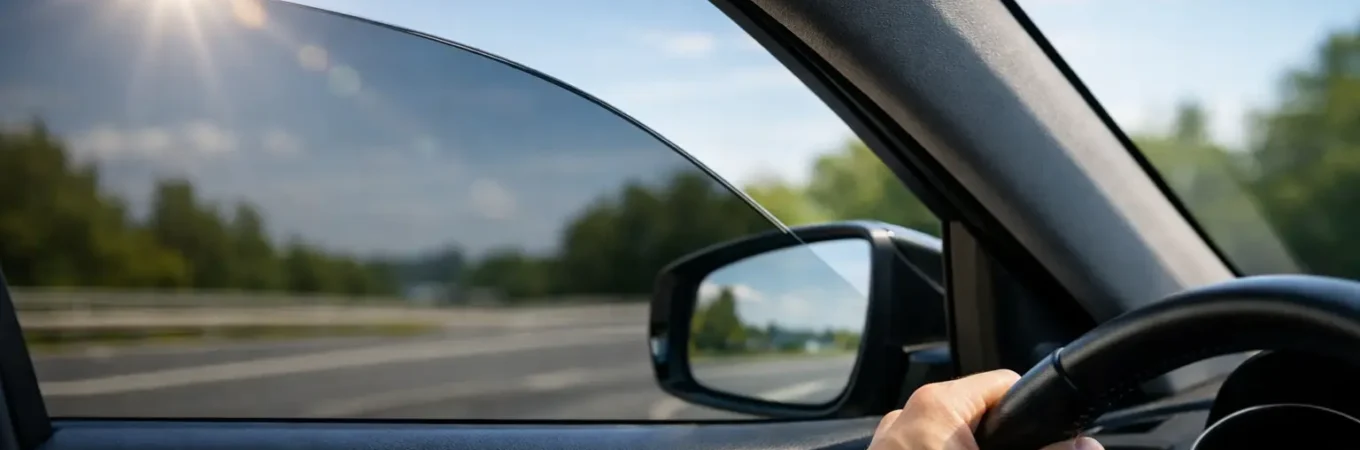
Your dashboard, leather seats, steering wheel, and skin all take a beating from the sun during everyday driving. So, does ceramic tint block UV? Yes, quality ceramic window tint can block up to 99% of harmful UV rays, but the exact protection depends on the specific film, its manufacturer, and whether it is installed correctly.
That distinction matters. Ceramic tint is one of the best upgrades available for drivers who want real comfort and protection, not just darker windows. It can reduce UV exposure while also cutting glare and rejecting heat, all without the signal interference common with some older metallic films.
Does Ceramic Tint Block UV Better Than Regular Tint?
Ceramic tint is built with non-metallic ceramic particles that help manage solar energy. Premium ceramic films are commonly rated to reject 99% or more of UVA and UVB rays. Those are the rays associated with skin damage, fading upholstery, cracked trim, and long-term wear inside your vehicle.
Regular dyed tint may provide some UV protection, especially when it is a quality product, but it is not automatically equal to ceramic film. Entry-level films are often selected for appearance and privacy first. Ceramic film is designed for drivers who want higher performance from their tint, including UV protection, better heat control, and clearer visibility.
The key point is that darkness does not tell you how much UV a film blocks. A light ceramic tint can provide excellent UV protection, while a very dark low-cost film may not deliver the same level of performance. If protecting your interior and reducing sun exposure are priorities, ask about the film’s UV rejection rating instead of choosing only by shade.
Why UV Protection Matters Inside a Vehicle
Many people think they are fully protected from the sun once they are inside a car. That is only partly true. Windshields are designed to block much of the more intense UVB radiation, but UVA can still pass through certain vehicle glass, particularly side windows. UVA is the type that reaches deeper into the skin and contributes to premature aging and skin damage over time.
For Knoxville drivers, that exposure adds up. A daily commute, time in school pickup lines, weekend trips on I-40, and long drives through East Tennessee can mean hours of sunlight coming through side and rear glass every week.
UV also affects the vehicle itself. Over time, sunlight can fade cloth and leather, dry out plastic trim, weaken adhesives, and leave dashboards looking dull or cracked. Tint will not stop every form of interior wear, but a high-quality ceramic film gives your cabin another layer of defense.
Ceramic Tint Does More Than Block UV
UV blocking is a major benefit, but it is not the only reason ceramic tint costs more than basic film. The ceramic construction can also reject infrared heat. Infrared energy is what you feel as heat on your face, arms, and seats when the sun is beating through the glass.
That is why two films with the same visible shade can feel completely different in the car. A standard dark film may make the cabin look darker, but a higher-performance ceramic film can do more to keep it comfortable. This is especially noticeable on black interiors, vehicles that sit outside at work, and cars with large glass areas.
Ceramic tint can also reduce harsh glare without making your windows excessively dark. For many drivers, that means a more comfortable afternoon commute and less squinting when sunlight reflects off wet pavement, nearby traffic, or the hood.
Another practical advantage is signal friendliness. Because ceramic tint is non-metallic, it generally will not interfere with cell service, GPS, key fobs, satellite radio, or other electronics. That is a useful difference for newer vehicles that rely on connected features every day.
UV Rejection, Heat Rejection, and VLT Are Different Ratings
Tint terminology can get confusing fast, and some shops make it more complicated than it needs to be. Three ratings are worth understanding before you choose a film.
UV rejection tells you how much ultraviolet radiation the film blocks. For maximum protection, look for a film rated to block 99% or more of UV rays.
Infrared rejection relates to the heat you feel from the sun. Higher infrared rejection generally means better cabin comfort, although manufacturers may calculate this number differently. A professional installer should be able to explain what the rating means for the exact film you are considering.
Visible light transmission, often called VLT, is the amount of visible light that passes through the window. A lower VLT number means a darker-looking tint. This rating affects privacy and appearance, but it is not a reliable measure of UV protection or heat rejection.
A clear or lightly shaded ceramic film can still block substantial UV and infrared energy. That makes it a smart choice for customers who want protection without changing the factory look too much.
What About Ceramic Tint on the Windshield?
Windshield tint is where comfort, safety, and local laws all need to be considered. A ceramic windshield film can help reduce UV exposure, glare, and heat coming directly through the largest piece of glass in the vehicle. Because windshields let in so much sunlight, even a nearly clear ceramic film can make a noticeable difference on a hot day.
However, windshield tint must be selected carefully. Visibility needs to stay sharp in rain, at night, and on winding roads. State tint rules also limit what can legally be installed on the windshield and front windows. The best choice is not always the darkest one. It is the legal, high-quality film that gives you the protection and comfort you want without compromising your ability to drive safely.
A professional installer can help match a windshield film with your side-window tint so the vehicle looks clean and performs well as a complete system.
Choosing the Right Ceramic Tint Tier
Not every customer needs the highest-priced film, but every customer should know what they are getting. A good shop should explain the difference between carbon film, entry ceramic, ceramic IR, and premium ceramic options without pressuring you into an upgrade that does not fit your vehicle or budget.
Entry ceramic is a strong option for someone who wants dependable UV protection and a noticeable improvement over basic tint. Ceramic IR is usually the better fit for drivers who spend a lot of time in the car, park outdoors, or want more serious heat reduction. Premium ceramic films are built for customers who want top-level performance, excellent clarity, and maximum comfort in Tennessee heat.
The right choice also depends on the vehicle. A compact car with a light interior may feel much different from a black SUV with a panoramic roof. A work truck, family vehicle, performance car, and luxury daily driver all have different priorities. The film should fit how you use the vehicle, not just what looks good in a tint sample.
Installation Quality Still Matters
Even the best ceramic film cannot perform as intended if the installation is rushed or poorly prepared. Clean glass, precise cutting, proper edge work, and careful curing all matter. A professional install should look smooth and clean, with no obvious contamination, lifting edges, or damage to trim and defroster lines.
After installation, do not judge the final result immediately. Fresh tint can look hazy or show small moisture pockets while it cures. That is normal. The timeline depends on weather and film type, but the installer should give you straightforward aftercare instructions so you know what to expect.
At 865 Tint, the goal is to make the decision simple: choose the level of privacy, heat reduction, and UV protection that fits your car, then get a clean installation built to last.
If sun exposure is your main concern, focus less on how dark the tint looks and more on verified UV rejection, the film’s heat performance, and legal visibility. A properly selected ceramic tint can protect your cabin and make every sunny drive around Knoxville feel a lot more comfortable.
1 Comment
Rear Window Tinting for Privacy and Comfort – 865 Tint
9 September 26 2:01 am[…] can fade upholstery, damage leather, and dry out trim over time. Premium films are designed to block a high percentage of UV rays, giving the back seat, rear deck, and other interior surfaces another layer of […]