
A clean windshield and clear side glass make every drive better, but tinted windows need a little more care than bare factory glass. Learning how to clean tinted car windows correctly protects the film you paid for, keeps your visibility sharp, and avoids the hazy, scratched look that can make even quality tint appear worn out.
The good news is that proper tint care is simple. You do not need harsh chemicals, aggressive scrubbing, or a cabinet full of detailing products. A gentle cleaner, clean microfiber towels, and the right technique will handle most fingerprints, dust, dog nose prints, and interior film buildup.
Why tinted windows need different cleaning products
Automotive window tint is a film applied to the inside surface of the glass. That film is durable, but it can be damaged by the wrong chemicals or rough cleaning tools. The biggest product to avoid is ammonia. It is common in some glass cleaners, and it can dry out tint film over time, contribute to discoloration, and weaken the adhesive around the edges.
A cleaner labeled ammonia-free is the safe choice. Tint-safe automotive glass cleaners work well, but a mild mix of water and a small amount of gentle dish soap can also work for routine cleaning. The goal is to lift grime from the surface without soaking the edges of the film or leaving behind a residue.
Be careful with cleaners that promise heavy-duty degreasing or streak-free shine without checking the label. If a product is designed for bathrooms, kitchens, or outdoor glass, it may be stronger than your tinted windows need. On a sunny Knoxville day, harsh cleaner also dries quickly on hot glass and can leave frustrating streaks.
What to use to clean tinted car windows
Keep the process simple. For most vehicles, these four items are all you need:
- An ammonia-free, tint-safe glass cleaner or a light soap-and-water solution
- Two or three clean microfiber towels, preferably low-lint and soft
- A soft microfiber applicator or towel for wiping cleaner onto the glass
- A clean, dry towel for the final buff
Microfiber matters more than people think. Paper towels can leave lint behind, while rough shop towels or old bath towels can trap grit and create fine scratches. A towel that has been used for wheels, wax, or greasy interior products should never touch window film. Even if it looks clean, it may contain debris that leaves marks on the tint.
For hard-to-reach lower corners or the bottom edge of a rear windshield, wrap a microfiber towel around a flat plastic detailing tool. Do not use a metal blade, razor scraper, or abrasive pad on tinted glass. Those tools can cut or permanently score the film.
How to clean tinted car windows step by step
Start by parking in the shade or cleaning during a cooler part of the day. Direct sun heats the glass, causing cleaner to evaporate before you can wipe it away. That is one of the most common reasons drivers end up with streaky windows after cleaning them.
First, use a dry microfiber towel to lightly remove loose dust from the interior glass. This step matters if your vehicle has been parked outside, carried pets, or spent time on dusty East Tennessee roads. Rubbing cleaner directly over dry grit can create fine scratches.
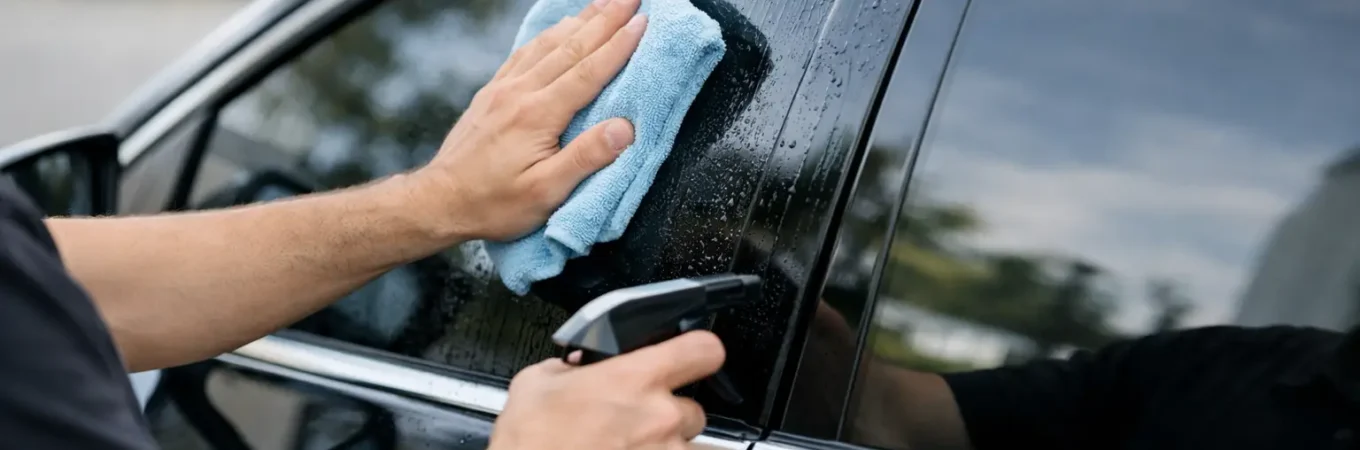
Next, spray your cleaner onto the microfiber towel instead of directly onto the window. A light mist is enough. Spraying the towel gives you better control and helps prevent excess liquid from running into the bottom edge of the tint, door panel, window switches, or defroster area.
Wipe the glass gently in overlapping passes. Work from top to bottom, paying attention to the corners and the area near the weather stripping where fingerprints and residue tend to collect. Do not press hard. If a spot does not come off with a gentle wipe, let the damp towel sit against it for a few seconds, then wipe again.
Use a second dry microfiber towel to buff away any remaining moisture. A side-to-side motion works well for the final pass. For the windshield and rear window, work in manageable sections so the cleaner does not dry before you finish.
If you are cleaning the inside and outside of the glass at the same time, use a different wiping pattern for each side. For example, wipe the inside horizontally and the outside vertically. If you notice a streak afterward, you will know which side needs another pass.
Cleaning rear windows with defroster lines
The rear glass deserves extra patience because the defroster lines sit on the inside surface, right behind the tint. Wipe gently in the direction of the lines rather than scrubbing across them. Excessive pressure or abrasive materials can damage the thin electrical connections that make the defroster work.
Avoid scraping at stickers, adhesive residue, or dried-on messes near those lines. If you need to remove something stubborn, use a tint-safe adhesive remover sparingly on a towel and test a small, less visible area first. When in doubt, professional help is cheaper than repairing damaged film or defroster lines.
Wait before cleaning newly tinted windows
Fresh tint needs time to cure. Depending on the weather, film type, and how much sun the vehicle receives, curing can take several days or longer. During that period, small water bubbles, light cloudiness, or a slightly uneven appearance can be normal as moisture works its way out from under the film.
Do not roll down newly tinted windows until your installer says it is safe, and do not clean the inside glass during the curing period unless you have been given specific instructions. Cleaning too soon can disturb the edges before the adhesive has fully set.
Once the tint is cured, routine cleaning is safe with the right materials. Premium ceramic films, carbon films, and other quality tint options still benefit from the same gentle care. Better film can offer stronger heat reduction, UV protection, and long-term color stability, but no window film is improved by ammonia or rough scrubbing.
Common mistakes that shorten tint life
The most avoidable mistake is using household glass cleaner without reading the ingredients. Many drivers grab whatever is under the sink, especially when they are cleaning the whole interior. If it contains ammonia, save it for a non-tinted household surface and use a tint-safe cleaner in your vehicle.
Another issue is over-cleaning. If you wipe tinted glass every few days with dry towels, you increase the chance of dragging dust across the film. Clean it when it needs it, and always use a lightly damp microfiber towel when there is visible grime.
Watch out for air fresheners, dashboard shine products, and interior protectants as well. Overspray can land on the glass and leave an oily film that smears when you try to clean it. Apply those products to an applicator towel first, not directly toward the dashboard or windows.
Finally, resist the urge to pick at a lifted corner or small edge issue. A little peeling can become a larger problem quickly. Professional tint removal and replacement are the right answer when film has failed, turned purple, bubbled excessively, or begun separating from the glass.
When a professional inspection makes sense
Cleaning will remove surface haze, fingerprints, and residue, but it cannot fix damage inside old film. If your tint looks cloudy after a careful cleaning, has bubbles that do not improve, or shows fading and purple discoloration, the issue may be the film itself rather than dirt.
A tint specialist can tell the difference between a window that needs a proper cleaning and one that needs removal or replacement. At 865 Tint, we help Knoxville-area drivers choose film options that match their goals, whether that means a straightforward appearance upgrade, more privacy, or stronger heat and infrared reduction.
Your tinted windows do a lot every time you drive: reducing glare, helping protect the interior from UV exposure, adding privacy, and giving your vehicle a cleaner finished look. Treat them with a soft towel and tint-safe cleaner, and they will keep doing their job without asking for much in return.