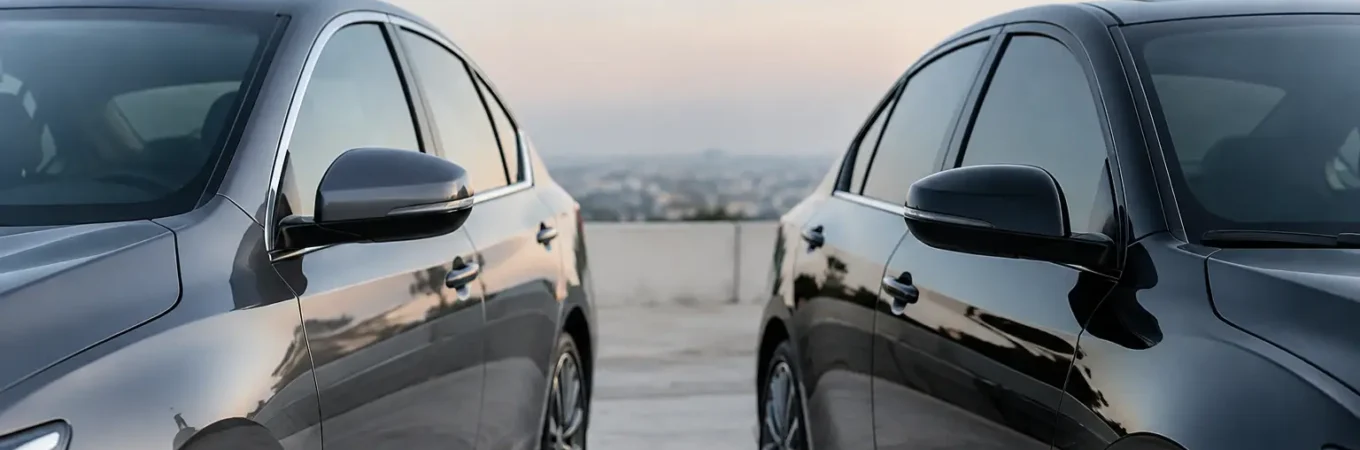
A dark window can make any vehicle look better, but looks are only part of the decision. When comparing dyed tint vs carbon film, the real difference shows up after weeks of Tennessee sun, long commutes, and a hot car sitting in a Knoxville parking lot. One option is built for an affordable appearance upgrade. The other gives you better heat control and a finish that holds its color longer.
The right film depends on what you want from your tint. If privacy and a cleaner look are your priorities on a tight budget, dyed film can make sense. If you want a cooler cabin, stronger durability, and fewer regrets down the road, carbon is usually the smarter step up.
Dyed Tint vs Carbon Film: The Main Difference
Dyed tint uses multiple layers of film, including a dyed layer that creates the shade you see from outside. It is one of the most common entry-level window films because it provides privacy, reduces glare, and gives a vehicle that classic tinted look at a lower price.
Carbon film uses carbon particles in the film rather than relying primarily on dye. That construction gives it a darker, richer appearance without the shiny or reflective look some drivers want to avoid. More importantly, carbon film does a better job reducing heat while resisting the color fade that can affect basic dyed tint over time.
Both films can provide UV protection, glare reduction, and added privacy when professionally installed. The bigger question is how much heat rejection, color stability, and long-term performance you expect from the investment.
What Dyed Window Tint Does Well
Dyed tint earns its place because it is affordable and effective for drivers who want a straightforward appearance upgrade. If your main goal is darker windows for privacy, glare reduction, or a more finished look, a quality dyed film can deliver a noticeable change without pushing your budget into premium-film territory.
It can also reduce some solar heat and help protect interior materials from harsh sunlight. For a second vehicle, a short-term lease, an older work vehicle, or someone who simply wants a legal shade installed cleanly, dyed tint is often a practical choice.
The trade-off is that dye absorbs heat instead of rejecting as much of it away from the vehicle. On a warm East Tennessee afternoon, that difference matters. Your interior may still get hot, especially if the vehicle has a large windshield, dark upholstery, or spends most of the day outdoors.
Over time, lower-quality dyed films may also begin to fade toward a lighter purple tone. Bubbling, peeling, and discoloration are not guaranteed, particularly with a good film and a professional installation, but dyed film generally has a shorter performance ceiling than carbon or ceramic options.
Why Carbon Film Is a Popular Upgrade
Carbon film is a strong middle-ground option for drivers who want more than basic tint without paying for top-tier ceramic technology. It offers a deep, clean black appearance that stays more consistent over time, which makes it a favorite for newer vehicles and owners who care about a polished final look.
The most noticeable benefit is improved heat rejection. Carbon film helps block more infrared heat than dyed tint, so the cabin can feel more manageable when you get back in after work, leave the gym, or park outside while running errands. Your air conditioning still has a job to do, but it does not have to fight as much solar heat through the glass.
Carbon film also avoids the signal interference concerns sometimes associated with certain metallic films. That means you can generally use phones, GPS, key fobs, and other electronics without worrying that your tint is working against them.
For many Knoxville drivers, carbon is the point where tint begins to feel like a comfort upgrade, not just a cosmetic one. It gives you privacy and style, but it also makes daily driving more pleasant through spring, summer, and those bright winter days when glare can still be a problem.
Heat Rejection: Where the Price Difference Makes Sense
Heat reduction is where customers most often notice the gap between dyed tint and carbon film. Dyed tint primarily darkens the window and absorbs a portion of incoming energy. Carbon film is designed to reject more heat before it builds up inside your vehicle.
That does not mean dyed tint is useless in the heat. Any quality window film can improve comfort compared with bare glass. But if you have ever opened a vehicle after it sat in direct sun and felt the steering wheel burn your hands, you understand why better heat rejection has real value.
Carbon is especially worth considering if you drive daily, carry kids or pets, have leather seats, or park outside at home or work. It can also help reduce strain on the A/C system by limiting how quickly the cabin heats up. The exact result depends on your vehicle, the shade selected, the glass coverage, and whether the windshield receives a legal heat-rejection film.
If maximum heat control is your priority, ceramic films go further than carbon. But for drivers looking for a meaningful upgrade at a more approachable price, carbon is often the sweet spot.
Appearance and Color Stability
Fresh tint can look great in almost any film type. The more useful question is how it will look one, three, or five years from now.
Dyed tint can provide a dark, uniform appearance at installation, but its dyed layer is more vulnerable to fading with extended sun exposure. The risk varies by film quality and installation conditions, yet color change is one reason many customers upgrade from basic dyed options.
Carbon film is known for a true black look that resists fading better. It is a good match for drivers who do not want their windows turning purple or uneven as the vehicle ages. On white, silver, gray, black, and darker-colored vehicles, the clean charcoal-black finish can make the whole vehicle look sharper without being flashy.
A professional installer also matters here. Even excellent film can look poor if it has contamination, rough edges, gaps, trapped debris, or damage around defroster lines. Quality workmanship is part of what you are paying for, regardless of which film you choose.
Privacy, Glare, and Legal Tint Shades
Both dyed and carbon tint can improve privacy by making it harder to see into your vehicle from outside. The amount of privacy depends on the visible light transmission, often called VLT, or simply the shade percentage. A lower percentage means a darker film.
Darker is not always better. Very dark tint can reduce outward visibility at night, particularly when backing up or driving on poorly lit roads. It can also create legal problems if the selected shade does not comply with Tennessee tint laws for your specific windows.
A good tint shop should help you select a shade that looks right, supports your driving habits, and stays within applicable rules. If you drive frequently at night, you may prefer a moderate shade on the front windows and a darker legal option on the rear. If glare is your biggest complaint, film selection and coverage can matter as much as going as dark as possible.
Which Film Is Right for You?
Choose dyed tint if you want an affordable way to add privacy, reduce glare, and improve your vehicle’s appearance. It works well when price is the deciding factor and you understand that its heat performance and long-term color stability are more limited.
Choose carbon film if you want a richer black finish, better heat rejection, and stronger resistance to fading. It is a smart choice for daily drivers, newer vehicles, and anyone who has been disappointed by cheap tint in the past.
The best value is not always the lowest upfront price. Replacing faded, bubbled, or poorly installed film later can cost more than choosing the right option the first time. At 865 Tint, the goal is to make that decision simple: clear film choices, clean installation, and a result that fits the way you actually use your vehicle.
Before you book, think about where your car sits during the day, how often you drive in direct sun, and whether you care more about a dark look or a cooler cabin. Those answers will point you toward the film that will still feel like the right choice every time you open the door.