
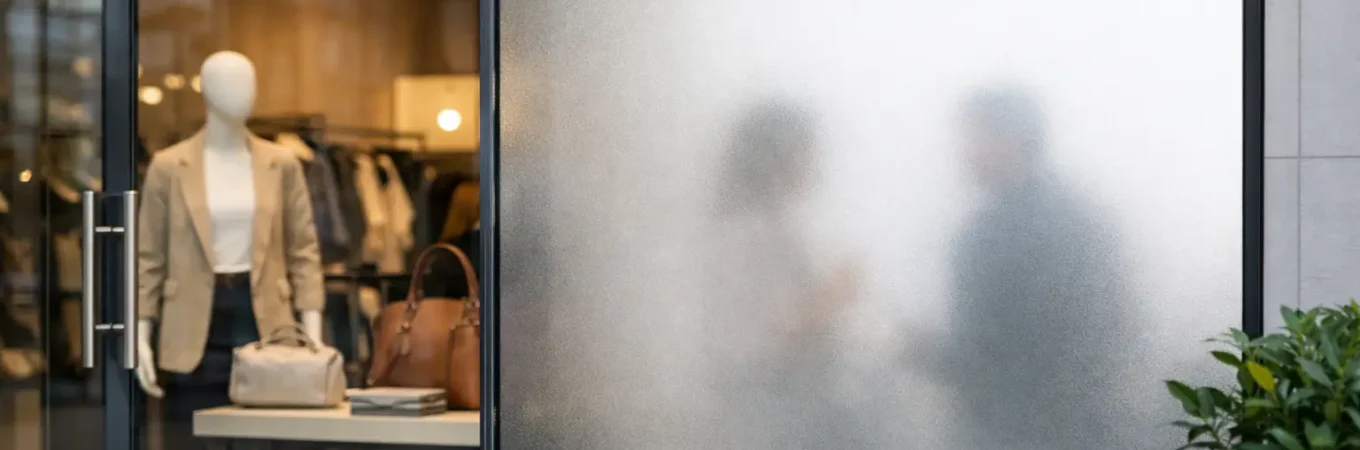
A front-facing window has a big job in a retail space. It needs to bring in daylight, support your store’s appearance, and make customers feel welcome. At the same time, it can expose back-office areas, storage rooms, treatment spaces, and displays you would rather keep out of view. Retail privacy film gives Knoxville business owners a practical way to create separation without closing off their space with blinds, curtains, or permanent construction.
The right window film can make a storefront feel more intentional from both sides of the glass. Customers still see a clean, professional business. Your team gets more privacy, less glare, and better control over how the space works during a busy day.
Where Retail Privacy Film Makes the Biggest Difference
Not every retail window needs to be fully covered. In fact, most businesses get the best result by using privacy film strategically. Frosted or decorative film is often a strong fit for interior glass between a sales floor and office, a consultation area, a salon station, a stockroom, or a staff-only hallway.
Street-facing glass can also benefit from the right coverage. A lower section of frosted film can block views of storage bins, checkout equipment, or work areas while leaving upper glass clear for natural light and visibility. This approach helps a shop feel open instead of shut off.
Privacy film is especially useful in businesses where customers expect discretion. Medical-adjacent retail spaces, salons, spas, tattoo shops, fitness studios, boutiques, cannabis retailers, and professional service offices can all use it to create a more comfortable experience. It also helps businesses with valuable inventory reduce the amount of merchandise visible after hours.
The goal is not always to hide the whole interior. It is to decide what customers should see, what they do not need to see, and how the glass should support your brand.
Privacy Without Losing a Welcoming Storefront
A common concern is that privacy film will make a store look dark or uninviting. That can happen when the wrong product is used or when every piece of glass gets the same treatment. A professional plan accounts for the layout of the shop, where sunlight comes in, how close the sidewalk or parking area is to the windows, and what customers need to see when they arrive.
Frosted film provides a clean, obscured finish while still allowing light through. It works well when you need privacy from close range, such as an interior office window or a glass door leading to a back room. Decorative films can add pattern or texture, which is useful when plain frosting does not match the look of the business.
For exterior windows, a tinted or reflective option may provide daytime privacy along with glare and heat reduction. This choice comes with a trade-off: privacy from reflective film depends on lighting conditions. During the day, the brighter outdoor side of the glass is more reflective. At night, if your interior lights are on and it is dark outside, people may be able to see in more easily. If nighttime privacy is a priority, frosted coverage, shades, or a more targeted design may be the better answer.
That is why a quick conversation about how your retail space operates matters more than picking a film based on a sample alone.
More Than Privacy: Glare, UV Protection, and Comfort
Retail privacy film can solve more than one problem at a time. Storefront glass often creates harsh glare on point-of-sale screens, product displays, mirrors, and employee workstations. It can also make certain corners of the store uncomfortably warm in the afternoon.
Solar-control window film can help reduce glare and heat coming through the glass without requiring you to keep blinds closed all day. That is a real advantage for shops that rely on window displays and a bright, open feel. Less direct sunlight can also help protect flooring, merchandise, signs, fabrics, and fixtures from fading over time.
UV protection is another benefit worth considering. Many window films are designed to filter a significant amount of UV exposure, which helps protect the items closest to the glass. It will not replace smart display placement, but it can be a valuable layer of protection for a space with large windows and expensive inventory.
For Knoxville businesses, comfort can be just as important as appearance. East Tennessee summers can put a lot of heat on west- and south-facing glass. A film that improves heat control may help make the sales floor more comfortable for customers and staff, especially near the front windows.
Choosing the Right Film for Your Shop
The best film depends on what you need the glass to do. A shop trying to conceal a cluttered stockroom has a different need than a boutique with afternoon glare or an office-based retailer that needs confidential consultation areas.
Start by identifying the main priority. Is it visual privacy, heat reduction, glare control, security, branding, or a combination of those goals? From there, the design becomes much easier.
A few practical choices usually come into play:
- Frosted privacy film is ideal for interior glass, office windows, staff areas, and sections of storefront glass where you want daylight but do not want a clear view through.
- Decorative privacy film adds texture, patterns, or a custom look while still creating separation. It can make plain glass feel more finished without a major remodel.
- Solar-control tint is a better fit for glare, heat, and daytime privacy on exterior windows. The available shade and reflectivity levels matter.
- Security film is designed for a different purpose. It can help hold broken glass together after an impact, but it should not be confused with privacy film or presented as an impenetrable barrier.
For many retail properties, a combination works best. Frosted film on interior office windows and lower storefront panels can handle privacy, while a solar film on the front glass helps with glare and heat. The finished result should feel consistent, not pieced together.
Make Privacy Film Part of the Customer Experience
Customers notice when a space feels organized. They may not immediately identify window film as the reason, but they notice that the checkout area looks cleaner, the consultation room feels more private, or the sun is not making it hard to browse a display.
Privacy film can also reinforce your store’s visual identity. Clean frosted bands on glass doors, repeated geometric patterns, or carefully placed logo areas can help define a space without filling the windows with temporary signs. The best applications are simple enough to look professional from the street and useful enough to improve the way the staff works inside.
That said, retail windows are valuable real estate. Do not cover the sections that make your products, signage, or entrance hard to see. If foot traffic and curb appeal drive your business, leave room for customers to understand who you are and what you offer before they walk in.
Why Professional Installation Matters
A privacy film project can look straightforward until you are dealing with oversized storefront panes, door hardware, mullions, old adhesive, and glass that gets direct sun all afternoon. Clean preparation and careful installation matter. Dust, uneven cuts, trapped moisture, and poor edge work can make a film look inexpensive even when the material itself is quality.
Professional installation also helps you avoid choosing a product that does not suit the glass or the building’s conditions. Some windows have existing coatings, insulated glass units, or manufacturer requirements that should be considered before applying certain films. A qualified installer can assess the project, explain the options clearly, and give you a finish that looks intentional.
For local business owners, working with a responsive shop matters too. Retail schedules are busy, and downtime costs money. 865 Tint helps Knoxville-area property owners choose practical film solutions that fit the space, the budget, and the way the business operates.
A good retail privacy film installation should not make your shop feel closed in. It should give you more control over light, comfort, and visibility while keeping the storefront ready to welcome the next customer.