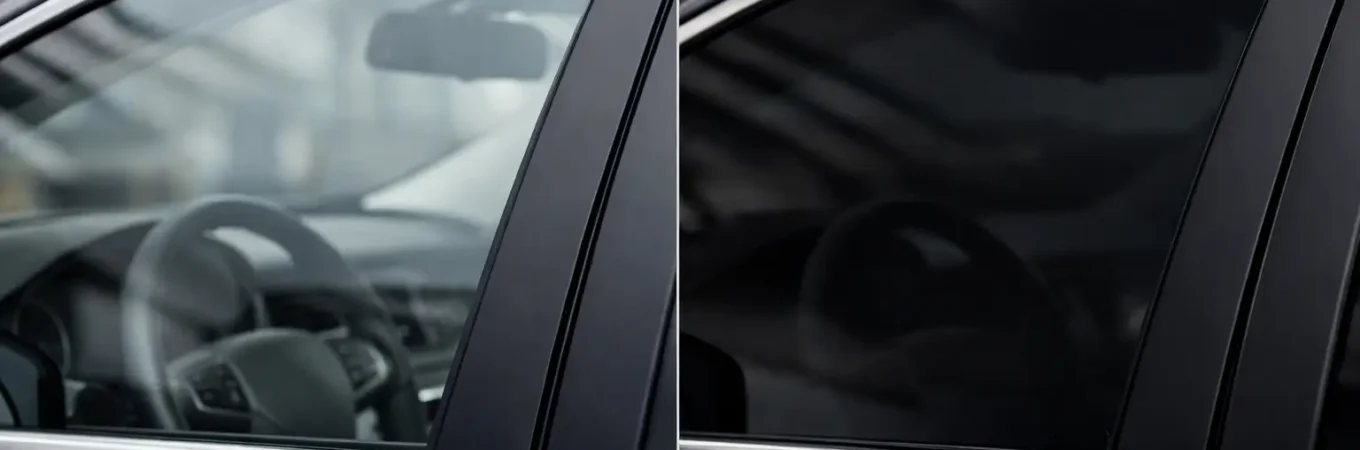
A new vehicle can look tinted from the factory, especially when the rear doors and back glass are dark. That is why factory glass vs aftermarket tint is a common question at the shop. The short answer: factory privacy glass and professionally installed window film may look similar from outside, but they perform very differently when it comes to heat, glare, UV exposure, and the look you can achieve.
If you want your vehicle to feel cooler on a Knoxville summer drive, protect the interior, or match the front windows to the rear, aftermarket tint is usually the part that makes the real difference.
Factory Glass vs Aftermarket Tint: The Main Difference
Factory-tinted glass is typically privacy glass. The color is built into the glass itself during manufacturing, most often on rear doors, rear quarter windows, and the back windshield. It gives passengers and belongings more privacy, but it is not the same thing as a layer of performance window film.
Aftermarket tint is a film applied to the inside surface of the glass. Quality films are designed to reject heat, reduce glare, block UV rays, and create a consistent appearance across the vehicle. Because it is installed as a separate layer, you can choose the darkness and performance level that fit your vehicle, comfort goals, and budget.
That distinction matters. A dark-looking factory rear window may still let in a significant amount of solar heat. Meanwhile, a lighter ceramic film can provide strong heat rejection without making the glass extremely dark.
What Factory Privacy Glass Does Well
Factory privacy glass is durable because the shade is part of the glass. It will not peel, bubble, or scratch like damaged film can. It also gives many SUVs, trucks, vans, and crossovers a finished rear-window look right off the lot.
For basic privacy, it does its job. People outside have a harder time seeing into the back of the vehicle, which can be useful when you carry tools, sports gear, groceries, or personal items. It also requires no appointment or added installation cost because it came with the vehicle.
The trade-off is that factory privacy glass is not a customizable heat-control package. You cannot change its shade, and it typically does not offer the same infrared heat rejection as a quality ceramic film. It may look dark, but appearance alone does not tell you how well the glass handles the sun.
Where Aftermarket Tint Earns Its Value
Aftermarket tint gives you control. Whether your priority is a clean appearance, cooler cabin temperatures, reduced glare, or protecting leather and interior trim from UV exposure, you can select a film built around that goal.
A professional installation can also create a more uniform look. Many vehicles arrive with dark rear privacy glass and clear front windows. Tinting the front doors to a legal shade helps balance the appearance while improving comfort for the driver and front passenger.
For drivers who spend real time on I-75, Pellissippi Parkway, or stop-and-go Knoxville traffic, heat rejection is often the biggest benefit. The vehicle may still get warm when it sits in direct sun, but quality film reduces the heat coming through the glass and makes the cabin more comfortable once the air conditioning is running.
UV protection is more than an interior concern
UV exposure can fade upholstery, dry out leather, and age dashboard materials over time. It also reaches drivers and passengers through side windows during daily commutes and road trips. Most quality window films block a high percentage of harmful UV rays, adding another layer of protection that factory privacy glass alone may not provide at the same level.
Ceramic film changes the conversation
Not all aftermarket tint is the same. Standard dyed or carbon films can improve appearance and provide useful glare reduction. Ceramic options are where heat performance becomes more noticeable, especially in East Tennessee summers.
Ceramic film is made without metal, so it is designed to avoid interference with electronics, GPS, phone signals, and keyless-entry systems. Entry ceramic can be a strong value for drivers who want better heat control, while ceramic IR and premium ceramic ultra films are built for customers who want maximum infrared heat rejection and a more comfortable cabin.
The right choice depends on how you use the vehicle. A weekend car may only need the look and privacy of carbon film. A daily driver, work truck, family SUV, or vehicle with a large windshield may justify stepping up to ceramic.
Can You Tint Over Factory Glass?
Yes. In fact, tinting over factory privacy glass is common. The film is installed on the inside of the factory glass, adding performance to what is already there.
This is especially helpful for rear windows. If the factory glass already provides privacy but still feels hot in the afternoon, a lighter ceramic film can increase heat rejection without creating an overly dark result. You do not always need the darkest possible shade to get meaningful comfort benefits.
There is one important consideration: shades stack. Dark privacy glass plus dark aftermarket film can become very dark, very quickly. A professional tint shop can help you choose a film shade that gives you the finished look you want while keeping visibility and applicable tint rules in mind.
Don’t Judge Tint by Darkness Alone
One of the biggest mistakes vehicle owners make is assuming darker tint automatically means better heat rejection. Darkness is mainly about visible light transmission and privacy. Heat performance depends on the film technology.
A high-performance ceramic film in a moderate shade can reject more heat than a much darker basic film. That can be a better fit for drivers who want clear nighttime visibility, a more subtle appearance, or strong comfort without making every window look blacked out.
This is also why two cars with similar-looking tint can feel very different inside. One may have basic film chosen for shade. The other may have premium ceramic film designed to address infrared heat, UV exposure, and glare.
Factory Windshields and Added Film
Most factory windshields are clear, even when the rest of the vehicle has privacy glass in the rear. They may have a small shaded strip at the top, but that does not provide the same coverage as professionally selected windshield film.
Windshield tint can be useful for glare reduction and heat control, but it needs to be approached carefully. The windshield is your primary visibility area, and applicable tint rules matter. A lighter, high-performance ceramic film is often the better route for drivers who want comfort and protection without sacrificing a clear view of the road.
A good installer will discuss your goals first, explain film options plainly, and make sure you understand what shade and coverage make sense for your vehicle.
What About Factory Glass on Homes and Businesses?
The same basic difference applies to property windows. Residential and commercial glass may be tinted, insulated, or low-E from the manufacturer, but those features do not always solve glare, privacy, or heat issues in a sunny room.
Aftermarket window film can be added to help reduce hot spots, glare on screens, fading near windows, and daytime visibility into a home or business. Just as with vehicles, the right film is not always the darkest one. A lighter performance film can preserve natural light while improving comfort.
Choosing the Right Option for Your Vehicle
Factory glass is not bad. It is simply built for a different purpose. If you are happy with the rear privacy and only want a factory-style look, tinting the front doors may be all you need. If you want stronger heat rejection throughout the vehicle, adding quality film to the rear factory glass and front windows creates a more complete upgrade.
Before choosing a film, think about where the vehicle spends its time. A garage-kept car used mostly at night has different needs than a black SUV parked outside all day. Consider your tolerance for heat, your preferred appearance, nighttime driving habits, and whether protecting a newer interior is a priority.
At 865 Tint, the goal is not to push every vehicle into the most expensive film. It is to give Knoxville drivers a clean installation and a film option that fits how they actually drive. The best tint choice is the one that still looks right, feels better in the sun, and holds up long after the first week behind the wheel.