A dark window and a window that turns frosted can both add privacy, but they solve very different problems. When customers ask about smart film vs tint, the real question is usually this: Do you need everyday heat and glare control, or do you need privacy you can switch on and off?
For most vehicles in Knoxville, traditional window tint is the practical choice. It improves the look of the vehicle, cuts glare, blocks UV exposure, and can reduce the heat you feel through the glass. For homes, offices, conference rooms, and storefronts, smart film can make sense when instant visual privacy matters more than solar performance or budget.
Smart Film vs Tint: The Core Difference
Window tint is a thin, professionally installed film that stays the same once it is applied. Depending on the film you choose, it can make glass darker, reject solar heat, reduce glare, protect against UV rays, and add privacy. It works all day without wiring, switches, or electrical components.
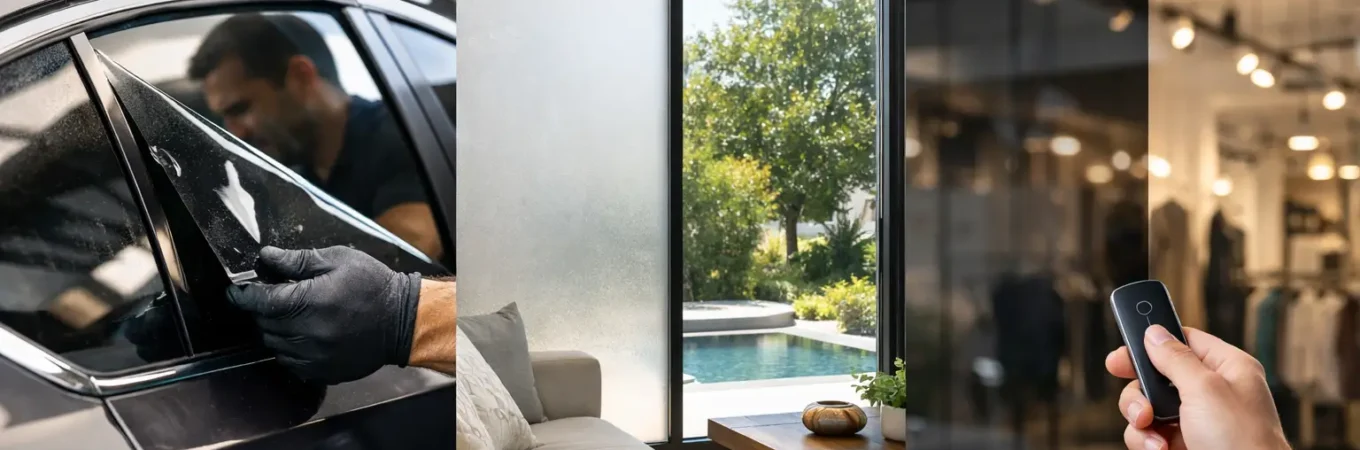
Smart film, often called switchable privacy film, uses a liquid-crystal layer that changes when electricity is applied. In one state, the film appears frosted or opaque. With power, it becomes clearer so people can see through the glass. It is most commonly used on interior glass walls, bathroom windows, conference room partitions, medical offices, and select residential spaces.
That difference matters. Tint manages sunlight and visibility through the glass. Smart film manages whether people can see through the glass at a given moment. Smart film is not simply a more advanced version of automotive tint, and it does not replace a quality ceramic tint when your main goal is cooler driving.
When Window Tint Is the Better Choice
Tint is built for the everyday problems most car owners and property owners actually feel: hot seats, harsh afternoon sun, screen glare, fading interiors, and a lack of privacy. It is also the more affordable option in most situations.
On a vehicle, tint is generally the clear winner. Smart film requires electrical connections and is not designed to replace the dependable, legal, solar-control performance of automotive window film. A professionally installed tint package gives your vehicle a cleaner appearance while helping protect the interior from UV exposure and reducing glare on the road.
For homes and businesses, solar window film is often the better fit when large exterior windows bring in too much heat or make employees and customers uncomfortable. It can help reduce glare at desks, protect flooring and furnishings from fading, and create more consistent comfort near sunny windows. Unlike smart film, it does not need power to keep working.
Tint also gives you more choices for balancing appearance and performance. At 865 Tint, customers can choose from carbon film, entry ceramic, ceramic IR, and ceramic ultra options. The right tier depends on your budget, how much heat rejection you want, and how long you plan to keep the vehicle or property.
Carbon film can be a strong value choice for drivers who want a darker look, privacy, and glare reduction. Ceramic films are better for customers focused on higher heat rejection, clearer visibility, and premium performance. Higher-end ceramic options are especially worth considering for East Tennessee drivers dealing with summer heat, long commutes, or vehicles with dark interiors that warm up fast.
When Smart Film Makes Sense
Smart film is a specialty privacy product. Its biggest advantage is control. You can have an open, transparent glass wall during a meeting or while enjoying natural light, then switch it to frosted when privacy is needed.
That makes it useful in places where curtains, blinds, or permanent tint would get in the way. A conference room can become private at the push of a button. A bathroom window can provide privacy without giving up daylight. A medical or professional office can separate spaces without making the building feel closed off.
It can also create a modern look in a higher-end home or commercial space. Glass partitions keep rooms visually open, while switchable film gives the owner a way to change the space quickly. For businesses, that can be a practical feature as well as a design choice.
Still, smart film comes with trade-offs. It costs more than standard window film, requires electrical planning, and needs a clean installation on properly prepared glass. If the film loses power, it typically returns to its frosted state, though the exact behavior depends on the product. It also is not meant to provide the same level of solar heat rejection as a dedicated exterior-facing ceramic or solar-control window film.
Privacy Is Not the Same as Heat Rejection
This is where many smart film vs tint comparisons get confusing. Darker glass can offer privacy during the day, but it does not guarantee privacy at night. When your interior lights are on and it is dark outside, people may be able to see in more easily than you expect.
Smart film handles visual privacy better because the frosted setting blocks clear views in either direction. But frosted glass still lets light through. It does not necessarily make a room darker, reduce sun glare, or stop heat from entering like a purpose-built solar film can.
For a vehicle, privacy and legal visibility limits also need to be considered together. Tennessee tint laws affect how dark certain vehicle windows can be, and the right choice depends on the glass location and vehicle type. A professional shop can help you choose a film that gives you the look and comfort you want without creating avoidable problems.
For a home or business, think about the direction the windows face. West-facing glass often needs serious glare and heat control late in the day. A street-facing bathroom or meeting room may need switchable privacy. A storefront may benefit from a combination of solar film on exterior windows and smart film on select interior partitions.
Installation and Maintenance Differences
Traditional tint installation is straightforward when handled by an experienced installer. The glass is cleaned and prepared, the film is precisely cut and applied, and the edges are finished for a clean appearance. Automotive tint needs time to cure, so some light haze or small water pockets can be normal during the drying process.
Quality installation matters because poor prep or rushed work can lead to contamination, uneven edges, lifting, or damage during removal. Professional removal matters just as much, especially on rear glass with defroster lines or on older vehicles where adhesive has baked into the glass.
Smart film installation is more involved. The glass must be measured carefully, and the electrical connection needs to be planned so wiring is discreet and reliable. Larger panels, unusual shapes, and existing trim can add complexity. This is not typically a quick add-on like tinting two front windows.
Maintenance is different, too. Most tinted glass can be cleaned with soft materials and ammonia-free products after curing. Smart film requires care around edges, wiring, and electrical components. If a smart film installation is going into a wet area or high-traffic commercial space, product selection and installation details matter even more.
Cost: Which Upgrade Delivers More Value?
Tint usually delivers the better return for drivers and for property owners whose main concerns are heat, glare, UV protection, and appearance. It is less expensive upfront, needs no electrical work, and provides a daily benefit you notice every time sunlight hits the glass.
Smart film is a higher-cost investment because you are paying for switchable technology, electrical integration, and specialized installation. It earns its value when a space truly needs flexible privacy. If you would otherwise install blinds or curtains that stay closed most of the day, smart film may help keep the room brighter and more open.
There is no universal winner. A commuter with a black interior, a homeowner with sunny living-room windows, and a business owner building glass-walled offices have different needs. The best option is the one that solves the problem you have most often, not the one with the most technology.
If your goal is a cooler vehicle, reduced glare, interior protection, and a sharp finished look, start with professional window tint and choose the film tier that fits your budget. If your goal is on-demand privacy for a glass room or partition, smart film may be worth the investment. A quick conversation about how you use the space can save you from paying for features you will not use and point you toward glass that works better every day.