
A west-facing living room can feel comfortable at breakfast and unbearable by midafternoon. Your floors fade near the glass, the TV catches every reflection, and the air conditioner works harder than it should. Learning how to pick home window film starts with identifying that exact problem – not just choosing the darkest film you can find.
Home window film can reduce heat, cut glare, add privacy, and block damaging UV rays without replacing good windows. But the right choice for a sunny den may be completely wrong for a shaded front entry or a bathroom. A professional result comes from matching the film to the room, the glass, and the way you use your home.
Start With the Problem You Want to Solve
Most homeowners are looking for one main benefit, even if they also want a few extras. Heat reduction is often the priority in rooms with large windows and direct afternoon sun. Glare reduction matters in home offices, media rooms, and spaces where sunlight hits a screen. Privacy is usually the goal for street-facing windows, bathrooms, and homes built close to neighbors.
UV protection belongs on nearly every list. Quality window film helps block the ultraviolet exposure that contributes to faded hardwood, artwork, furniture, rugs, and window treatments. It is a practical upgrade for any room with valuable interiors near the glass.
Be honest about the priority. A highly reflective film may offer excellent heat control and daytime privacy, but it can change your home’s appearance and may not provide privacy after dark when interior lights are on. A frosted decorative film offers privacy but is not automatically the best choice for sun control. Choosing based on the problem first keeps you from paying for a feature that does not solve the issue you actually notice every day.
How to Pick Home Window Film by Room
Think room by room instead of treating every window the same. Sun exposure, privacy needs, and the room’s purpose should guide the selection.
Living Rooms, Kitchens, and Sunrooms
These areas usually need solar-control film. Look for a film designed to reject solar heat, reduce harsh glare, and filter UV rays while still allowing useful natural light inside. The amount of visible light transmission matters here. A lighter film preserves a more open view and brighter room, while a darker film can provide more glare reduction and a stronger tinted look.
For many homes, a neutral or lightly tinted ceramic film is the best balance. It is designed to manage heat without making the glass look excessively dark or mirror-like. That matters when you want comfort but do not want every window to look noticeably tinted from the curb.
Bedrooms and Street-Facing Windows
Privacy may be the first concern, especially on the first floor. Decorative, frosted, or privacy-focused films can limit visibility through the glass while still letting in daylight. Frosted film works particularly well on a lower window where you want light but do not need a clear view out.
Reflective film can create daytime privacy, but it is not a one-way privacy solution at night. Once lights are brighter inside than outside, people outside may be able to see in. If nighttime privacy is nonnegotiable, pair film with blinds, shades, or curtains instead of expecting a solar film to handle the job alone.
Bathrooms, Entry Doors, and Interior Glass
For bathrooms and glass near an entry, decorative privacy film is often the straightforward answer. It can obscure the view while keeping the space bright. Patterns, gradients, and frosted finishes can also give plain glass a more finished look without the cost and construction involved in replacing it.
Interior glass panels can use a different type of film than exterior-facing windows because heat control may not be relevant. In these spaces, prioritize privacy, appearance, and how much light you want to pass through.
Home Offices and Media Rooms
Glare is the enemy in rooms with monitors, televisions, and video calls. A solar film with good glare reduction can make a workspace much easier to use without closing the blinds all day. If color accuracy is important for design work or photography, avoid selecting a heavily tinted film without seeing a sample first. A neutral film is usually easier on the eyes and less likely to shift the look of natural light.
Compare Film Types Without Getting Lost in Jargon
Not every film is built the same. Entry-level dyed films can change the look of glass and provide some glare control, but they are generally not the strongest choice for long-term heat rejection. For homeowners focused mostly on a darker appearance or basic privacy, they may fit the budget. For major sun exposure, it is worth looking higher up the film range.
Carbon films are a solid middle-ground option. They can offer a clean appearance, dependable glare reduction, and better heat performance than basic dyed film. They are often a practical choice when cost matters but you still want a professional-grade solution.
Ceramic films are typically the better choice for homeowners who want stronger heat reduction while keeping a lighter, more natural-looking window. Ceramic technology is especially useful on large glass areas, rooms that get intense direct sun, and homes where you do not want to sacrifice too much daylight for comfort.
Higher-end ceramic infrared films are made for maximum solar heat management. They cost more, but can make sense when a room gets punishing afternoon sun, has large exposed windows, or consistently feels hotter than the rest of the house. The right decision is not always the most expensive film. It is the film that solves the room’s problem for a price you feel good about.
Check the Numbers That Actually Matter
Film specifications can sound technical, but a few terms are worth understanding. Visible light transmission, often called VLT, refers to how much light passes through the window. A lower percentage means a darker look. Solar heat rejection describes how effectively the film reduces heat coming through the glass. UV rejection tells you how much ultraviolet exposure the film blocks.
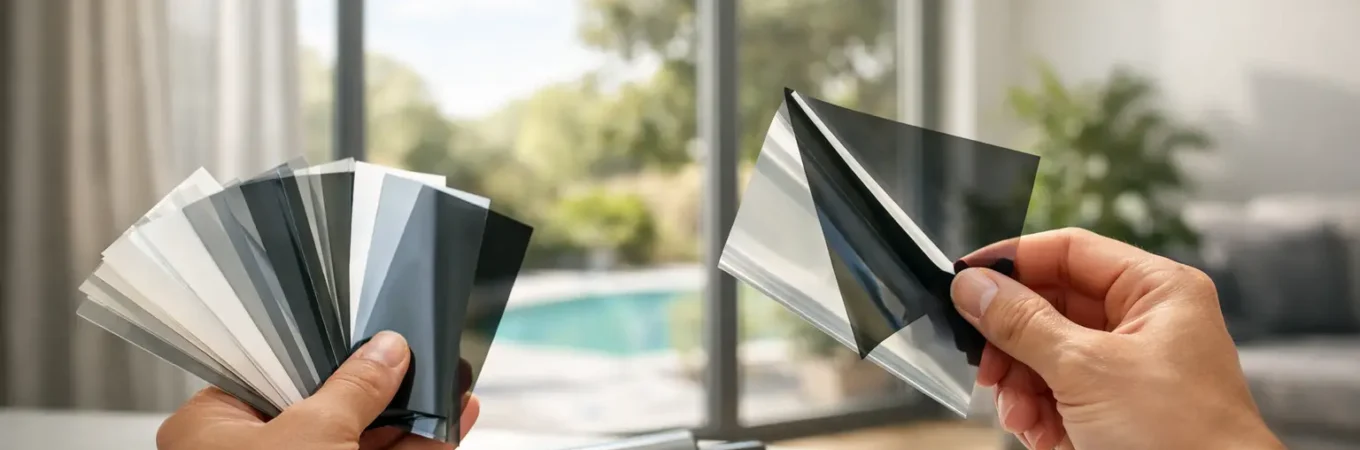
Also ask about glare reduction and whether the film has a reflective exterior appearance. A film can perform well on paper but still look too dark, too shiny, or too warm in color for your home. Viewing real samples against your own windows is better than choosing from a tiny color chip.
Do not assume darker always means cooler. Modern ceramic films can deliver strong heat rejection in lighter shades. That is a major advantage for homeowners who want a brighter room and a more subtle exterior appearance.
Make Sure Your Windows Can Handle the Film
Before installation, the glass itself needs to be evaluated. Double-pane windows, insulated glass units, tempered glass, older windows, and windows with existing coatings may have different film recommendations. Some films can increase thermal stress in certain glass configurations, which is why professional assessment matters.
If your windows are under a manufacturer warranty, check the warranty terms before selecting a film. A reputable installer should help you choose a compatible product and explain what is appropriate for your particular glass. This is not the place to guess based on a roll of film from a big-box shelf.
Professional installation also affects how the finished work looks and lasts. Clean glass preparation, accurate cutting, and careful edge work help prevent contamination, visible gaps, bubbling, and peeling. Window film needs time to cure, so some temporary haziness or small moisture pockets can be normal after installation. Your installer should set clear expectations about that process and provide guidance on when to clean the glass.
Set a Realistic Budget for the Benefits You Need
Window film pricing depends on window size, number of panes, accessibility, film type, and whether old film must be removed first. Large or high windows can require more labor, and premium ceramic products cost more than basic privacy film. The lowest quote is not always the best value if the film has limited performance or the installation is rushed.
A smart approach is to prioritize the rooms that bother you most. Start with the sun-heavy living room, the office with screen glare, or the front windows where privacy is a concern. You can always add film to other windows later. A local tint specialist can help you compare options in person and choose a film that fits the home instead of pushing a one-size-fits-all package.
For Knoxville homeowners, 865 Tint can walk through the practical choices, from affordable privacy film to premium ceramic options built for stronger heat reduction. The goal is simple: make your home more comfortable without making the decision harder than it needs to be.
Take a few minutes to notice when each room gets sun, where glare shows up, and which windows make you feel exposed. Those answers will point you toward a window film you will appreciate every day, not just on installation day.