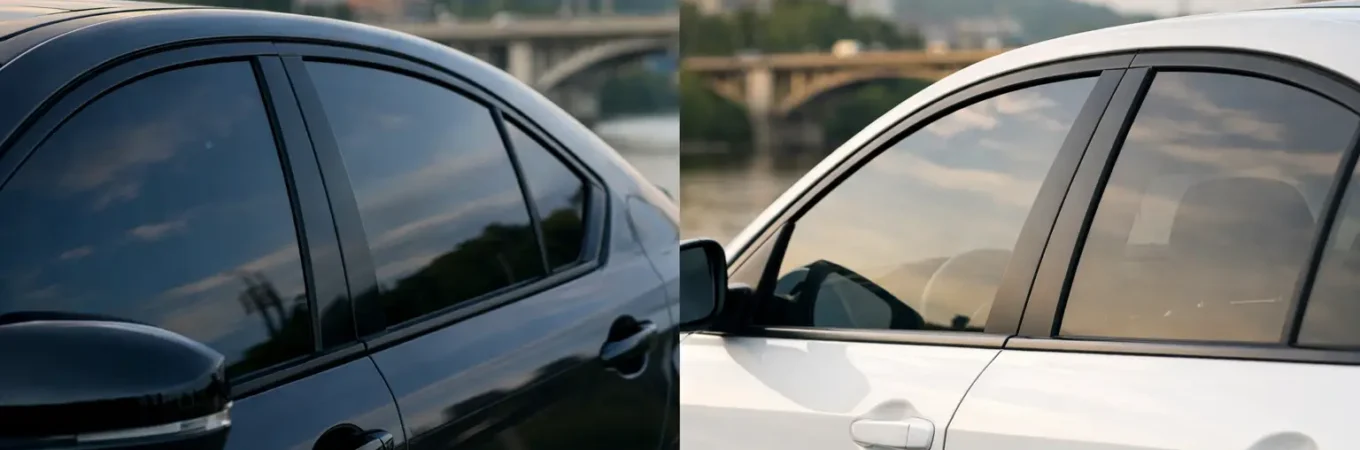
A dark-looking window can make two very different promises. When comparing carbon tint vs dyed, the real question is not just how your vehicle will look leaving the shop. It is how the film will handle Knoxville summer heat, daily glare, fading, and years on the road.
Dyed film is usually the budget-friendly starting point. Carbon film costs more, but it is built for drivers who want better heat control and a finish that holds up. Neither choice is automatically right for every vehicle or budget. The best film is the one that delivers the comfort, appearance, and value you actually need.
Carbon Tint vs Dyed: The Core Difference
Dyed window film uses layers of dye to create its darker appearance. The dye absorbs sunlight, which helps reduce visible light and glare inside the vehicle. It gives a clean tinted look at an accessible price, making it a common option for drivers who primarily want privacy and style.
Carbon tint uses carbon particles within the film instead of relying on dye alone. Those particles help block a larger amount of infrared heat, which is the heat you feel when the sun is beating through the glass. Carbon film also has a more stable black appearance that is less likely to turn purple or fade over time.
Both films can provide UV protection when professionally installed with quality materials. The difference shows up most clearly in heat performance, long-term appearance, and overall durability.
What Dyed Tint Does Well
Dyed tint has a place. If your main goal is to give your car, truck, or SUV a darker look, increase privacy, and cut down on glare without spending more than necessary, dyed film can be a practical choice.
It can make a major visual difference on a vehicle with clear factory glass. It also helps soften harsh sunlight during morning and afternoon commutes. For an older vehicle, a short-term lease, or a driver who simply wants a clean tint job at the lowest price point, dyed film may check the right boxes.
The trade-off is that dyed tint absorbs solar energy rather than rejecting as much of it. That means the glass and film can get warmer, and some of that heat can still make its way into the cabin. On a hot East Tennessee day, you may notice the difference when you climb into a vehicle that has been parked outside for hours.
Quality matters here. Cheap dyed film is more likely to discolor, bubble, peel, or lose its appearance early. Professional installation helps prevent contamination and poor adhesion, but it cannot turn low-grade film into a long-lasting product. If you choose dyed tint, make sure you understand exactly what film is being installed and what warranty comes with it.
Why Many Drivers Upgrade to Carbon Film
Carbon tint is a strong middle ground for drivers who want more than a dark appearance but do not necessarily need the highest-end ceramic option. Its biggest advantage is better heat rejection without a metallic look or interference concerns associated with some older metal-based films.
The cabin can feel more comfortable because carbon film is designed to reduce infrared heat more effectively than standard dyed film. Your air conditioning still has work to do in a Tennessee summer, but it does not have to fight as much solar heat coming through the windows. That can make a noticeable difference for commuters, parents with passengers in the back seat, and anyone who parks outdoors during the day.
Carbon film also tends to keep its rich black color longer. A good carbon tint does not have the purple or washed-out look commonly associated with aging, low-quality dyed film. For drivers who care about keeping a newer vehicle sharp, that longer-lasting finish is often worth the higher upfront cost.
It also offers a cleaner ownership experience over time. When you pay for professional tint, you should not be thinking about replacing it after a few seasons because it no longer looks right. Carbon is built for people who want to install it once and enjoy the result.
Heat Rejection Is Not the Same as Darkness
One of the most common tint misunderstandings is assuming darker glass always means better heat control. Visible light transmission, often called VLT, tells you how much visible light passes through the window. A lower VLT means a darker-looking tint. It does not automatically mean the film rejects more heat.
For example, a dark dyed film may look similar to a dark carbon film from outside the vehicle. Inside, the carbon film can provide better infrared heat reduction even at the same shade. This is why choosing tint based on darkness alone can lead to disappointment.
If heat is your priority, ask about the film’s heat-rejection performance, not only the shade. If privacy and appearance are your top priorities, a dyed option may be enough. If you want a balance of cooler interior temperatures, a premium appearance, and long-term durability, carbon is usually the better fit.
Appearance and Signal Considerations
Both dyed and carbon films can give your vehicle a clean, uniform look when installed correctly. The difference is in how that look ages. Dyed film can gradually fade, especially with heavy sun exposure. Carbon is known for its stable charcoal-black finish, which is why it is popular with drivers who want a more premium result without an overly reflective appearance.
Carbon film is non-metallic, so it generally will not create the signal interference concerns that can come with certain metallic films. That matters for drivers who rely on phone reception, GPS, keyless entry, or satellite radio. While many modern films are designed with electronics in mind, carbon remains a straightforward choice for keeping the look and performance clean.
Price: Is Carbon Worth the Upgrade?
Carbon tint costs more than dyed film because the material and performance are better. Whether it is worth it depends on how long you plan to keep the vehicle and what bothers you most about driving in the sun.
For a vehicle you plan to sell soon, dyed tint may be the sensible value play. You still get privacy, glare reduction, and a finished look without putting more money into a car that will not be yours for long.
For a daily driver, a newer vehicle, a work truck, or a vehicle that spends a lot of time outside, carbon often makes more sense. The improved heat reduction and better color stability can justify the initial upgrade over years of ownership. It is especially appealing if you have had cheap tint turn purple, bubble, or become difficult to see through before.
There is also a step above carbon: ceramic film. Ceramic options can provide stronger heat rejection, including higher infrared performance, without requiring an extremely dark shade. If you are highly sensitive to heat, have a black interior, drive long distances, or want the best available comfort, entry ceramic or ceramic IR may be worth comparing alongside carbon.
Choosing the Right Film for Your Vehicle
Start with the job you need your tint to do. If your priority is a darker, more private appearance at an affordable price, dyed tint can be a good fit. Choose a reputable film and professional installation so the result looks clean and lasts as long as possible.
If you want a better combination of looks, heat reduction, and fade resistance, carbon tint is the stronger everyday choice. It delivers a premium black finish and more comfort without jumping all the way to high-end ceramic pricing.
Before installation, consider your vehicle’s window layout, interior color, parking habits, and how often you drive in full sun. A light-colored interior may stay more comfortable than a black interior, but every vehicle benefits differently from heat-rejecting film. The right shade also needs to work within Tennessee tint laws, so a professional shop can help you select a legal setup that still gives you the privacy and appearance you want.
Installation Makes the Film Perform
Even excellent carbon film can disappoint when it is installed poorly. Dust under the film, rough edges, contamination, trapped moisture, and damaged defroster lines can turn a good product into a frustrating experience. Professional installation is about careful prep, precise cutting, and taking the time to leave the glass clean and the edges finished correctly.
The same is true when replacing old tint. Removing faded or bubbling film without damaging rear defroster lines or leaving adhesive behind takes patience and the right process. A clean removal gives the next installation a proper surface to bond to.
At 865 Tint, the goal is simple: help Knoxville drivers choose a film tier that fits their vehicle and budget, then install it with the care that makes the upgrade worth it. A clear conversation before the appointment can save you from paying for a shade that looks right but does not perform the way you expected.
Your windows should do more than look darker in the parking lot. Choose the film that makes the drive cooler, clearer, and more comfortable every time the sun comes out.