If your windshield turns your car into a greenhouse every afternoon, the film you choose matters more than most people realize. The best windshield tint options are not just about making the glass look darker. They are about cutting heat, reducing glare, protecting your interior, and staying within the law while keeping your visibility clear.
For most drivers, windshield tint is a comfort upgrade first and a style choice second. A good film can make your commute easier on your eyes, help your AC work less, and reduce the constant sun exposure that fades dashboards and beats up interiors over time. But not every film performs the same, and the cheapest option is rarely the one people are happiest with a year later.
What actually makes a windshield tint worth it
Windshield tint has a tougher job than side window tint. Your front glass is the main place where sunlight, glare, and heat hit you while you drive, so the film has to perform well without making visibility worse. That means the best choice usually comes down to heat rejection, optical clarity, UV protection, and how natural the glass looks from inside the car.
This is where people get tripped up. They focus on darkness when they should be looking at performance. On a windshield, especially, a lighter high-quality film often outperforms a darker low-end film. If your goal is staying cooler and more comfortable, the film technology matters more than how shaded it appears.
Best windshield tint options by film type
Dyed film
Dyed film is usually the budget entry point. It can improve appearance and cut some glare, but it is not typically the strongest option for serious heat rejection. On a windshield, that trade-off shows up fast during hot Tennessee summers.
If someone wants the lowest upfront cost and only minor performance gains, dyed film may look appealing. The downside is shorter-term satisfaction. It tends to fade faster, and it usually does not deliver the level of heat control most drivers expect once they have paid for professional installation.
Carbon film
Carbon film is a stronger step up and a solid option for drivers who want good value without jumping straight to premium pricing. It offers better heat rejection than basic dyed film and holds its color well over time. It also gives glass a clean, non-reflective look that many vehicle owners prefer.
For windshield use, carbon can be a practical middle-ground choice. It improves comfort and glare reduction without pushing the budget as high as top-tier ceramic films. If you want something noticeably better than entry-level tint but still cost-conscious, carbon deserves a serious look.
Entry ceramic film
Entry ceramic is where windshield tint starts making a bigger difference in daily driving comfort. Ceramic technology is known for better heat rejection, strong UV protection, and excellent clarity, which matters a lot on the front windshield.
This is often the sweet spot for drivers who want real performance but do not necessarily need the highest-end film available. You get a more comfortable cabin, less harsh sunlight on your face and hands, and a better overall driving experience without going all the way to premium ceramic lines.
Ceramic IR film
Ceramic IR is one of the best windshield tint options for drivers who care most about heat control. It is designed to block more infrared heat, which is the part of sunlight that makes your cabin feel brutally hot even when the glass does not look especially dark.
This is the kind of upgrade people appreciate every single day, especially if they commute, park outside, or drive a vehicle with a large windshield. It costs more, but the payoff is immediate in comfort. Your car feels less baked, your AC has an easier job, and long drives in bright sun become a lot more manageable.
High-end ceramic ultra film
If you want the premium choice, high-end ceramic ultra film is built for maximum performance. This is for drivers who want top-tier heat rejection, excellent UV blocking, strong glare control, and very clear visibility from inside the vehicle.
It is not the cheapest route, and that is the point. Premium film is for people who plan to keep the vehicle, want the best materials on the glass, and care about long-term results. On a windshield, where clarity and comfort matter every day, premium ceramic film can absolutely be worth it.
Best windshield tint options for different driver priorities
If you want the best value
Carbon or entry ceramic usually makes the most sense. Both offer a clear step up from basic film, and both can improve comfort without stretching the budget too far. The right pick depends on how much heat rejection you want and how long you plan to keep the vehicle.
If you want maximum heat rejection
Ceramic IR or ceramic ultra is usually the answer. These films are built for people who are tired of a hot steering wheel, sun beating on their arms, and interiors that never seem to cool down. If heat is your main complaint, this is where your money works hardest.
If you care most about visibility
Higher-quality ceramic films tend to be the best fit. They are known for cleaner optics and a more natural view through the glass. That matters on rainy days, early mornings, and night driving when cheap film can create extra haze or distortion.
If you are trying to keep costs low
Carbon is often the safer play than going with the absolute cheapest film available. Spending a little more upfront can save you from disappointment, fading, or wanting a replacement sooner than expected.
Legal limits matter more on a windshield
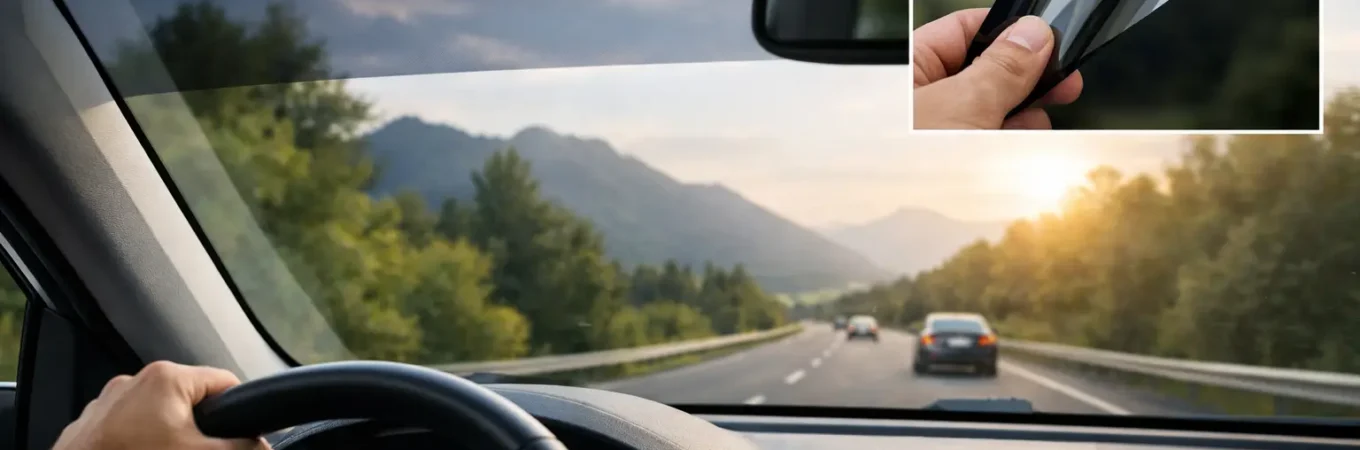
Windshield tint is not the same as side window tint from a legal standpoint. Laws vary by state, and the front windshield is usually more restricted than the rest of the vehicle. In many cases, drivers are allowed a tinted strip across the top, while full windshield coverage depends on local regulations and the film used.
That is why professional guidance matters. A good tint shop should help you understand what is allowed, what performs well, and what gives you the best balance of comfort and compliance. Going too dark or choosing the wrong product for the windshield can create problems you do not want later.
Why professional installation matters
Even the best film can look bad if the install is sloppy. Windshield glass is large, curved, and unforgiving, which means installation takes skill. Dirt, creases, light gaps, and edge contamination are all more noticeable on the front glass.
A clean install also matters because the windshield is always in your line of sight. You do not want visual distortion, trapped debris, or poor fitment staring back at you every time you drive. Professional installation gives you the best chance at clean appearance, long-term durability, and the performance you actually paid for.
How to choose the right film for your car
Start with how you use the vehicle. If it is a daily driver parked in open sun, heat rejection should be near the top of the list. If you drive at night often, prioritize clarity. If you are balancing performance and affordability, look at mid-tier carbon or entry ceramic before jumping to the cheapest option.
It also helps to think long term. A windshield tint is something you notice every day, not once in a while. Spending a little more on better film usually feels smarter when you are still happy with the result years later.
For drivers in East Tennessee, summer heat, bright sun, and year-round glare make windshield performance more than a luxury. It is a practical upgrade. Shops like 865 Tint usually see the same pattern: people come in asking about darkness, then end up caring more about comfort, clarity, and quality once they understand the differences.
The real answer to the best windshield tint options
There is no one-size-fits-all answer, because every driver has a different budget and a different tolerance for heat and glare. But if you want the short version, carbon is a solid value choice, entry ceramic is a smart performance upgrade, and ceramic IR or ceramic ultra is where you go for premium comfort.
If you are deciding based on daily satisfaction, not just upfront price, ceramic films usually come out ahead. A windshield tint should make your drive easier, cooler, and more comfortable without creating visibility issues or legal headaches. Choose the film that fits the way you actually drive, and you will feel the difference every time the sun hits the glass.
1 Comment
Car Tint Examples for a Cooler, Cleaner Ride – 865 Tint
30 August 26 7:03 am[…] windshield brow, sometimes called a visor strip, is a simple example for drivers who are tired of sun sitting low […]