That clean, shaded windshield look can make a vehicle feel cooler, more private, and easier on the eyes – right up until a ticket, failed inspection, or redo job wipes out the value. If you’re wondering how to tint a windshield legally, the short answer is this: it depends on your state, the film you choose, and exactly where that film goes on the glass.
The part that trips people up is simple. Windshield tint rules are usually stricter than side and rear window rules. A setup that looks fine on one car in one state might be illegal a few miles away across a state line. If you want the benefits of tint without the headache, you need to understand the legal limits before anything gets installed.
How to tint a windshield legally starts with state law
There is no one national rule for windshield tint that applies the same way everywhere. State laws control what is allowed, and those laws often get specific about visible light transmission, reflective properties, and how far down the windshield any tint strip can go.
In many states, full windshield tint is restricted or flat-out prohibited unless you have a qualifying medical exemption. What is commonly allowed is a non-reflective strip across the top portion of the windshield, often called an eyebrow or visor strip. The legal depth of that strip varies by state. Some laws measure from the top edge down a certain number of inches, while others use the AS-1 line marked by the glass manufacturer.
That means the first step is not picking the darkest film or the highest heat-blocking option. The first step is checking the law where the vehicle is registered and driven. If you live in Tennessee but regularly drive through nearby states, it’s smart to think beyond your home zip code too.
What makes windshield tint legal or illegal?
A windshield tint job usually comes down to four things: coverage area, darkness, reflectivity, and exemptions.
Coverage area matters because many laws allow tint only on the top section of the windshield. Once film extends below the permitted line, it can become illegal even if the film itself is relatively light.
Darkness matters because the lower the visible light transmission percentage, the less light gets through the glass. That can affect driver visibility, especially at night or in bad weather. On a windshield, even a light-looking film may still be restricted if state law does not allow it.
Reflectivity matters because mirror-like or highly reflective films can create glare for other drivers. Many states set limits on that too.
Exemptions are the gray area people hear about and often misunderstand. Some drivers with certain medical conditions may qualify for additional protection from light or UV exposure. But a medical need does not automatically mean any tint is legal. Exemptions usually require paperwork, approval, and compliance with specific limits.
The safest legal option for most drivers
For most vehicle owners, the safest path is a legal windshield strip paired with compliant tint on the side and rear windows. That setup gives you glare reduction where you notice it most during sunrise and sunset, without creating the same legal risk as a fully tinted windshield.
If heat is your main concern, film technology matters more than many people realize. A premium ceramic film can reject a lot of heat without needing to be extremely dark. That’s a big deal for drivers who want comfort and UV protection but also want to stay within the law.
This is where people sometimes make an expensive mistake. They assume darker always means better. In reality, the better film is often the one that gives you heat rejection and clarity at a legal shade, not the one that simply looks darkest from the outside.
Why professional installation matters when legality is on the line
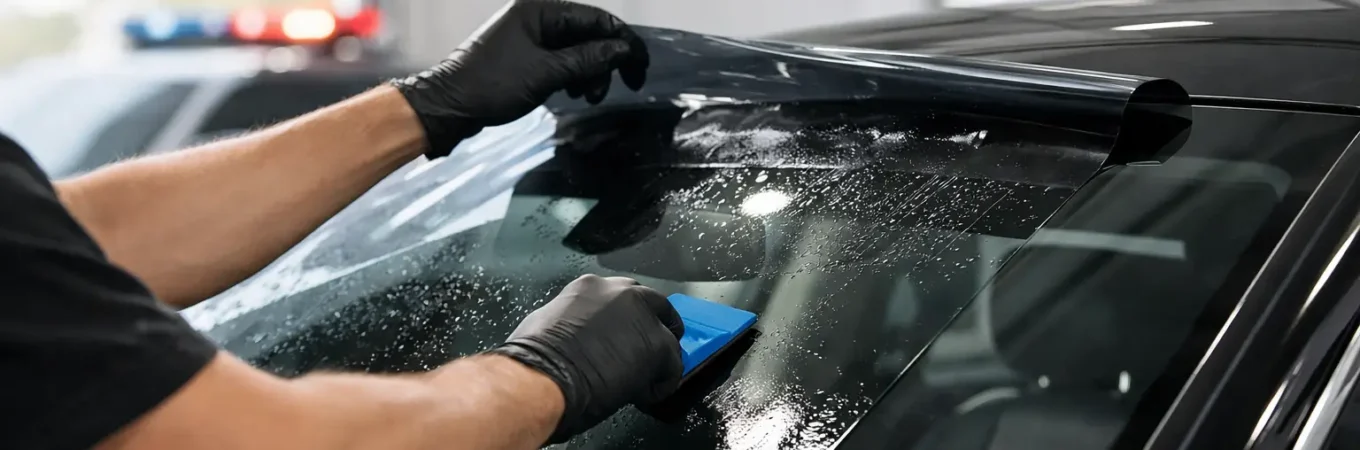
If you are serious about learning how to tint a windshield legally, professional installation is part of the answer. Not because the film magically becomes legal when a shop installs it, but because a qualified tint specialist is far less likely to guess.
A professional shop should know how state rules apply to windshield strips, film specs, and placement. Just as important, the install quality affects visibility. Windshield film has no room for sloppiness. Dust, distortion, edge lift, and poor shrinking are not just cosmetic issues on front glass. They can become a safety problem.
A clean install also matters if you ever get questioned about your setup. If your film is obviously cut wrong, too low, or bubbling, it tends to attract the wrong kind of attention. A proper install looks factory-clean and stays within the intended boundaries.
Questions to ask before any windshield tint goes on
Before you book the job, ask a few direct questions.
Ask what your state allows on the windshield specifically, not just on “front windows.” Those are different parts of the law. Ask whether the shop is recommending a strip only or a full windshield film. If they suggest full windshield tint, ask how that lines up with your state’s regulations.
Ask what type of film is being used. Carbon and ceramic films are not the same, and heat rejection can vary a lot. Ask whether the film is non-reflective and whether it is designed to maintain clear visibility from inside the vehicle.
Ask if the shop can explain the trade-off between comfort and compliance. A trustworthy installer won’t oversell you into a setup that causes problems later. They should be able to talk plainly about what looks good, what performs well, and what keeps you on the safer side of the law.
Full windshield tint: where people get into trouble
Full windshield tint has become more popular because drivers want better heat control and a consistent look all around the vehicle. The appeal is real. A high-quality clear or very light ceramic film can help with infrared heat and UV exposure while keeping the windshield looking almost unchanged.
But this is also where legal issues get tricky. In some places, even a very light full windshield film may not be allowed unless there is a medical exemption. That surprises a lot of people because the film may look nearly invisible.
The lesson is simple: legal does not always mean noticeable, and noticeable does not always mean illegal. You cannot judge compliance just by appearance. You need the actual state rule and the actual film specification.
Medical exemptions are real, but they are not a shortcut
Some drivers do qualify for medical tint exemptions. Conditions related to sun sensitivity, skin disorders, or certain eye problems may support an exemption in some states. If that applies to you, handle it the right way.
Start with your state’s requirements, then your doctor, then your installer. Keep copies of any required paperwork in the vehicle if state law calls for it. And do not assume the exemption gives unlimited freedom. Many states still restrict how dark the film can be or require certain documentation formats.
This is another reason to avoid back-lot advice and internet myths. “My friend has it and never gets stopped” is not a legal standard.
Picking the right film if comfort is your goal
If your real goal is less heat, less glare, and better UV protection, you may not need to push the legal line at all. Better film often beats darker film.
A quality ceramic option can make a noticeable difference in cabin comfort, especially during East Tennessee summers, while preserving visibility and keeping the vehicle looking clean. If you are choosing between a bargain film and a better-performing product at a legal shade, the better product usually delivers more long-term value.
Cheap film tends to show its weaknesses fast. Purple fading, edge issues, poor clarity, and weak heat rejection are common complaints. Saving a little upfront does not feel like a win if the tint looks rough or has to be removed early.
How to avoid a ticket and a redo
The easiest way to avoid problems is to make legality part of the job from the beginning, not something you worry about after the install. Verify the rule. Choose the right coverage. Use a film that matches your goals. Have it installed cleanly.
It also helps to keep your paperwork. Some films come with manufacturer information and installation records. That may not get you out of every roadside conversation, but it can help clarify what was installed.
And if you already have questionable windshield tint, do not ignore it. Removal done the right way is better than waiting for a citation or dealing with visibility issues. A clean removal protects the glass and gives you a fresh start with a legal setup.
For drivers around Knoxville, working with a local tint specialist who understands both performance and compliance makes the process a lot easier. You want a shop that will tell you what works, what doesn’t, and what makes sense for your vehicle instead of just putting film on glass.
A good windshield tint job should give you comfort and confidence at the same time. If it only gives you one, it probably isn’t the right job.