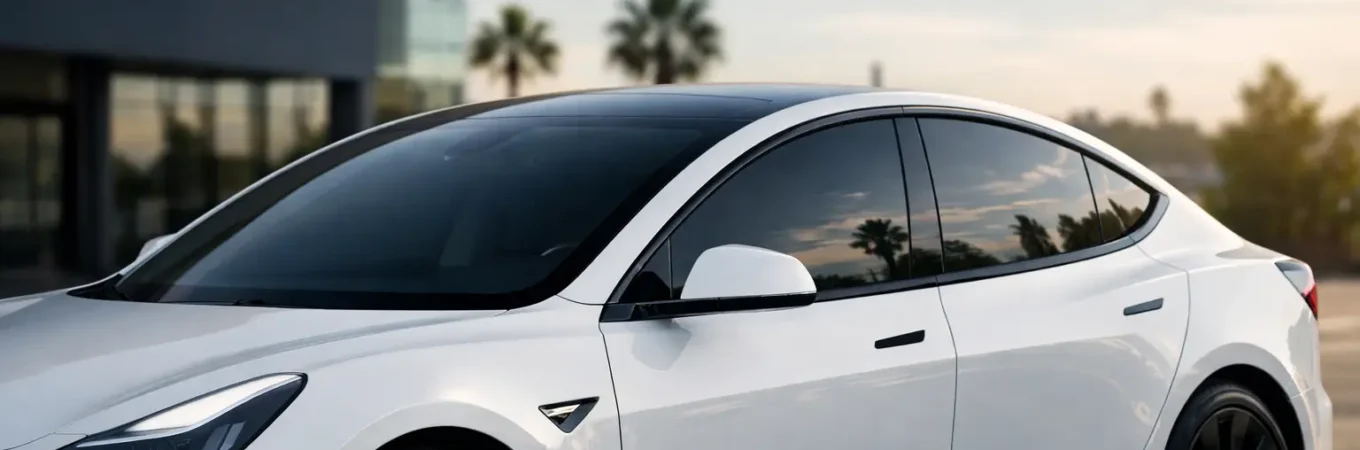
A good Tesla window tint example is not simply the darkest film on the lot. On a Tesla, the right tint should complement the clean body lines, reduce heat through that big factory glass, and still give you the visibility you need every day around Knoxville. The best-looking result is usually one that feels intentional: darker where privacy matters, clear enough where driving safety matters, and installed cleanly enough that it looks like it came with the vehicle.
Teslas make tint choices more noticeable than many other vehicles. Their large windshield, expansive rear glass, and panoramic roof create a bright, open cabin. That is part of the appeal, but it can also mean more glare, more heat, and more eyes into your car. Here is what a smart Tesla tint setup can look like and how to choose one that fits the way you drive.
Tesla Window Tint Example: A Balanced Daily-Driver Setup
For many Tesla Model 3 and Model Y owners, a balanced setup starts with a legal shade on the front doors and a slightly darker look on the rear doors and back glass. The goal is a clean, uniform appearance without making the front of the vehicle look overly dark or making night driving harder than it needs to be.
A common example is a quality ceramic film on the sides and rear, paired with a very light heat-rejecting film on the windshield where permitted. The side and rear tint creates privacy and gives the Tesla a sharper profile. The light windshield film focuses on comfort rather than darkness, helping cut glare and infrared heat without changing the open feel of the cabin.
This is a strong choice for commuters, families, and anyone who spends time parked outdoors. It keeps the vehicle looking refined while addressing the biggest complaint many Tesla owners have in East Tennessee: the cabin can get hot fast in direct sun.
What Different Tint Shades Look Like on a Tesla
The shade you choose changes the personality of the vehicle. On white, silver, gray, and black Teslas, a medium-dark ceramic tint often creates the cleanest contrast. On red or blue models, the same shade can make the paint color stand out even more.
A lighter shade offers a subtle factory-plus appearance. It is ideal if you want UV protection and heat reduction but do not want the car to look heavily customized. This approach works especially well for drivers who travel frequently at night, have long rural commutes, or prefer maximum visibility in rain.
A medium shade is the go-to option for many owners. It gives the Tesla a noticeably cleaner look from the outside, adds useful privacy, and still feels practical for daily driving. If you want people to notice the upgrade without the vehicle looking too dark, this is often the sweet spot.
A darker rear section can work well when privacy is the main priority. Parents with kids in the back seat, drivers carrying work equipment, and owners who park in busy areas often prefer this look. The trade-off is reduced visibility through the rear side glass at night, especially in poorly lit parking lots.
The right shade depends on your driving habits, your vehicle color, and Tennessee tint requirements. A professional installer should help you choose a setup that looks good and stays within the law, rather than treating every vehicle the same.
Why Tesla Owners Often Choose Ceramic Film
Tesla glass lets in a lot of light, and light is only part of the heat problem. Infrared energy is a major reason a cabin feels uncomfortable after sitting in the sun. That is why ceramic film is a popular upgrade for Tesla owners who want real heat reduction, not just a darker appearance.
Carbon film is a solid, affordable option for drivers who want a better look, privacy, and dependable UV protection. It can be a good fit for a budget-conscious tint package. But if heat control is high on your list, ceramic is usually worth considering.
Entry ceramic gives you stronger heat rejection without jumping straight to the highest-priced option. Ceramic IR adds more infrared rejection for drivers who spend a lot of time on the road, while premium ceramic ultra film is designed for owners who want the strongest available comfort and clarity. The higher-end choices can be especially useful on a Tesla because of the windshield and glass roof area.
For a vehicle with an electric powertrain, cabin comfort also matters for efficiency. Tint will not magically transform range, but reducing how hard the climate system has to work can make a difference in how comfortable the car feels on a hot afternoon.
Should You Tint the Tesla Windshield and Roof?
The windshield is where a Tesla tint job becomes more of a comfort upgrade than a style upgrade. A light, high-quality film can help reduce glare and heat while keeping your view clear. Windshield tint is also the area where legal limits matter most, so the film and placement should be discussed before installation.
The factory panoramic roof already has a dark appearance, but that does not always mean it provides the level of heat rejection you want. Some drivers are happy with the factory glass, while others notice heat radiating down during summer drives. Tinting the roof can improve comfort, particularly for taller drivers and passengers who sit close to the glass.
Roof tint is not necessary for every Tesla. If your car is garage-kept, you mainly drive in the evening, or you are satisfied with the factory roof performance, sides, rear glass, and windshield may be the better place to invest. If you regularly park outside or take long daytime trips, roof film can be a worthwhile addition.
The Rear Glass Takes Extra Care
Tesla rear glass is one of the areas that separates a basic tint job from professional work. On certain Tesla models, the rear glass is large, curved, and visually prominent. A poor installation can show gaps, contamination, uneven edges, or distracting lines.
The best result comes from careful prep, precise cutting, and the right installation method for that particular vehicle. The film should sit cleanly along the edges and look consistent from inside and outside the car. That detail matters because Tesla interiors are minimal by design. There is nowhere for sloppy workmanship to hide.
If you are having old tint removed before a new installation, removal should be just as careful. Adhesive residue, damaged defroster lines, and scratched glass can turn a simple upgrade into a headache. Professional removal is about protecting the glass and preparing it correctly for the next film.
Tennessee Tint Rules Still Matter
A Tesla can look great with tint, but the best setup is one you can drive with confidence. Tennessee rules set limits for visible light transmission and windshield coverage, and those limits can affect what makes sense for your front doors, rear glass, and windshield.
Factory glass can already have some shading, which means the final reading is based on the combination of the glass and film, not just the number printed on the tint box. That is one reason a trusted local shop measures and recommends film based on your actual vehicle.
Be cautious with extremely dark front windows or a dark windshield strip that extends too far down. It may look dramatic in photos, but it can create legal trouble and reduce your ability to see pedestrians, cyclists, and hazards after dark. Good tint should improve your driving experience, not create a new problem.
A Clean Tesla Tint Job Is More Than the Film
Film quality matters, but installation quality is what you see every time you walk up to the car. Clean edges, proper curing, careful handling around trim, and clear communication about aftercare all make a difference.
After installation, minor moisture haze or small water pockets can be normal while the film cures. They should clear as the film dries. Avoid rolling the windows down until your installer says it is safe, and do not judge the finished result too early. A proper tint job needs a little time to settle.
At 865 Tint, the goal is to help Tesla owners choose a film package that fits their budget, comfort needs, and preferred look – without overselling what they do not need. Whether you want a subtle daily-driver upgrade or maximum ceramic heat rejection, the right answer starts with how and where you use your Tesla.
The best Tesla tint example is the one that still looks right six months from now: comfortable on a hot Knoxville afternoon, clear when you are driving home after dark, and finished with the kind of detail that makes the car feel even more like yours.