
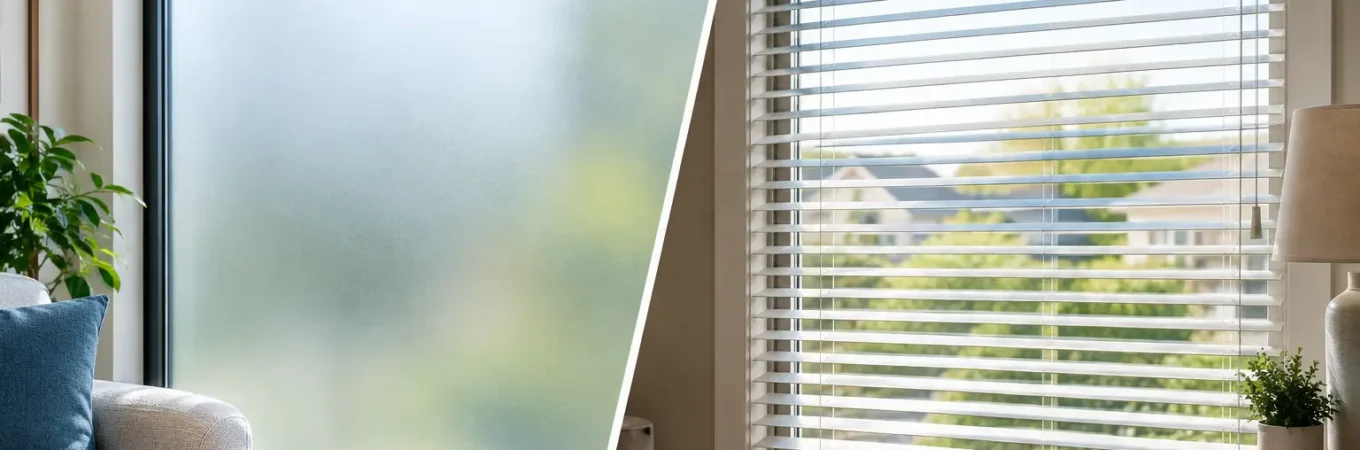
A street-facing living room can feel exposed fast, especially after dark when interior lights turn the glass into a display window. Residential privacy film versus blinds is not just a style choice. It affects how much daylight you keep, how often you clean, how much heat reaches the room, and whether your windows look finished from both inside and out.
For Knoxville homeowners, the better option depends on what you want the window to do. Blinds are adjustable and familiar. Privacy film is low-profile, permanent-looking, and can bring added glare, UV, and heat-control benefits. In some rooms, the strongest answer is using both.
Residential Privacy Film Versus Blinds at a Glance
Blinds give you control. You can raise them for a clear view, tilt the slats to soften light, or close them for privacy. That flexibility makes blinds a solid fit for bedrooms, bathrooms, and any room where you want the option to fully block outside visibility.
Privacy film changes the glass itself. Frosted and decorative films obscure the view through a window while still allowing natural light to enter. Solar and reflective films can reduce daytime visibility into the home, cut glare, and help reduce solar heat. Unlike blinds, film does not need to be raised, lowered, or adjusted every morning.
The trade-off is simple: blinds can be opened completely, while privacy film usually provides a consistent level of privacy and appearance. If preserving an unobstructed view is your priority, the specific film type matters a lot.
Privacy: Daytime and Nighttime Are Different
This is where homeowners can make the wrong choice if they only think about daylight.
Frosted privacy film is dependable around the clock. It prevents clear views through the glass whether it is sunny outside or dark, making it especially useful for bathroom windows, front-door sidelights, garage windows, and glass near a neighboring property. You still get daylight, but you give up a clear view out.
Reflective and darker solar films work differently. During the day, they can make it harder for people outside to see in because the exterior side is brighter. At night, when your interior lights are on and it is darker outside, that effect can reverse. They are excellent for glare and heat reduction, but they should not be treated as full nighttime privacy on their own.
Blinds offer the stronger answer when you need total privacy after sunset. Close them, and the room is covered. If you want daytime light plus dependable nighttime privacy, a frosted film or privacy film paired with simple blinds is often the practical choice.
Best Uses for Privacy Film
Privacy film earns its keep in windows that stay covered most of the time anyway. A bathroom window is the obvious example, but it also works well on a home office that faces a busy street, a laundry room, a front entry with sidelights, or a basement window close to a walkway.
It is also a clean solution for homeowners who do not like the look of heavy window coverings. Film sits directly on the glass, so there are no cords, bulky slats, or fabric panels competing with the room’s design.
Best Uses for Blinds
Blinds make more sense when the view is part of why you bought the home. If your kitchen looks out over a backyard, the Smokies, or a wooded lot, covering the glass permanently may feel like a loss. With blinds, you can enjoy the view when you want it and close up when you do not.
They are also useful in bedrooms, where sleep, privacy, and light control may matter more than maintaining daylight. Blackout shades may be a better fit than standard blinds for homeowners who work nights, have young children, or deal with early morning sun.
Light Control and Glare Reduction
Blinds reduce light by physically covering the window. Even when slats are tilted open, they can create striped light patterns and leave some glare coming through. That may be fine in a casual room, but it can be frustrating near a TV, computer monitor, or work desk.
Window film filters sunlight across the whole pane. It can reduce glare without making the room feel shut down, which is a major advantage in bright East Tennessee rooms with large, sun-facing windows. The room stays usable during the day without requiring you to pull every covering closed.
Film is not a blackout product. If you need near-total darkness, blinds, shades, curtains, or a combination of coverings will do a better job. But for the homeowner who wants softer light without losing the open feel of a room, film is hard to beat.
Heat, UV Protection, and Energy Comfort
This is the category where professional window film can offer value beyond privacy. Quality residential film can help reject a portion of solar heat before it enters the room. That can make spaces near large windows more comfortable and may reduce the strain caused by direct afternoon sun.
Film can also help block UV exposure that contributes to fading on floors, furniture, artwork, and interior finishes. Blinds protect what is directly behind them when closed, but they do not filter sunlight across the glass the same way.
That does not mean blinds have no energy benefit. Closing blinds during the hottest part of the day can help limit sunlight entering a room. Cellular shades in particular can add insulation. Still, they only work when someone remembers to close them, while professionally installed film works all day without another step.
Homeowners should be realistic about expectations. Window film can improve comfort and reduce glare, but it will not fix poor insulation, air leaks, or an undersized HVAC system. It is one practical upgrade, not a cure-all.
Cleaning, Repairs, and Daily Upkeep
Blinds collect dust. Their individual slats, cords, and corners take time to clean, and white blinds can show buildup quickly in kitchens or homes with pets. They can also bend, break, tangle, or become uneven over time.
Privacy film is much simpler day to day. Once it has fully cured after installation, it can be cleaned like glass using a soft cloth and a film-safe cleaner. There are no moving parts and no dust-catching slats. For busy households, that low-maintenance factor matters more than it may seem at first.
The downside is that damaged film is not repaired one small piece at a time. If it is scratched, peeled, or you decide you want a different look, the film needs to be removed and replaced. A professional installation helps avoid bubbling, edge lift, and uneven coverage that can make DIY film look temporary.
Cost and Long-Term Value
Basic blinds can be an affordable first purchase, especially for a single standard-size window. Costs rise when you choose custom sizes, premium materials, motorization, or specialty blackout products. Outfitting an entire home with quality blinds can become a significant project.
Privacy film pricing depends on the number and size of windows, glass type, access, and the film selected. Decorative frosted film and performance-focused solar film solve different problems, so the lowest-priced option is not always the right one.
Think about value based on the room. For a bathroom window that stays closed behind blinds every day, film may be the cleaner long-term choice. For a bedroom where you want full darkness at night and sunlight in the morning, blinds or shades may deliver more value. For a west-facing family room, heat-rejecting film can improve comfort while blinds handle nighttime privacy.
When Using Both Makes the Most Sense
You do not have to choose one solution for every window. Film and blinds work well together when you want several benefits at once. A solar-control film can cut glare, UV exposure, and daytime heat, while blinds provide nighttime privacy and extra light control when needed.
This combination is especially useful in living rooms, home offices, and large-window spaces where closed blinds would make the room feel dark. The film handles the sun all day. The blinds are there when you want a softer look, privacy after dark, or a darker movie night.
A professional installer can help match the film to the window’s purpose instead of putting the same product everywhere. At 865 Tint, that means starting with how you use the room, where the sun hits, and what level of privacy you actually need.
Choose for the Window, Not Just the Look
If your main goal is permanent privacy with natural daylight, frosted privacy film is usually the better fit. If you want adjustable privacy, a clear outside view, or blackout capability, blinds have the advantage. If heat, glare, and UV protection are high on your list, residential window film deserves serious consideration.
The right choice should make the room easier to live in, not add another daily chore. Look at each window at the time you use the space most, then choose the option that gives you comfort without asking you to compromise on the things you enjoy about your home.