A black dashboard can get hot enough to make you pull your hand back after a Knoxville summer afternoon. Meanwhile, UV exposure is quietly drying out leather, fading fabric, and turning once-rich interior trim dull. If you want to protect car interiors from sun, the best approach is not one product or one habit. It is a few smart layers that reduce heat, block UV, and keep the sun from doing damage every time your vehicle is parked.
What Sun Exposure Does to Your Interior
Sun damage does not usually show up all at once. It builds over months of commutes, ball games, grocery runs, and long days parked at work. The windshield lets in a wide field of sunlight, while the side and rear glass expose seats, door panels, consoles, and trim from different angles throughout the day.
UV rays are a major cause of fading and material breakdown. They can bleach carpet and cloth upholstery, dry leather, and weaken the binders that give vinyl and plastic their finished look. Heat makes the problem worse. High cabin temperatures can contribute to warped dash panels, sticky surfaces, lifted trim, and cracking around areas that already get regular sun exposure.
Light-colored interiors are not immune just because they feel cooler. They may show discoloration or yellowing instead of obvious fading. Dark interiors often hide dirt well, but heat up faster and can make dried-out plastics and leather damage more noticeable.
The right protection also makes daily driving more comfortable. Less glare, a cooler cabin, and fewer hot surfaces are benefits you feel right away. Preserving your vehicle’s condition is the long-term payoff.
Protect Car Interiors From Sun With Window Film
For most vehicles, professional window tint is the strongest first move because it protects the space before sunlight reaches your interior. A quality film helps reject heat and filter harmful UV rays through the glass. That means your seats, dash, door panels, and electronics take less punishment on every drive and every parking stop.
Not all window film performs the same way. Basic dyed film can improve appearance and add privacy, but it is not the best choice when heat rejection is the main goal. Carbon film is a practical upgrade for drivers who want a clean look, good privacy, and dependable performance without moving into the highest price range.
Ceramic film is worth considering if your vehicle spends a lot of time outside. Entry ceramic film provides stronger heat control than traditional options, while ceramic IR and ceramic ultra films are built for drivers who want more serious infrared heat rejection. The right tier depends on your budget, the vehicle, and how much time you spend in direct sun.
Why installation quality matters
A great film still needs a clean, careful install. Poor installation can leave contamination, uneven edges, bubbling, or damage around seals and trim. It can also create an appearance you regret every time you walk up to the car.
A professional tint shop can help you choose a legal shade for your vehicle and explain the differences between film options in plain language. At 865 Tint, the goal is to match the film to how you actually use your vehicle, whether that is a daily commute across Knoxville, a family SUV parked at practice, or a weekend truck that sits outside most of the week.
Windshield tint requires special attention because visibility and state regulations matter. A proper windshield strip or legally appropriate windshield film option can help reduce glare, but it should never come at the expense of safe driving. Ask about what works for your vehicle and local requirements before choosing a shade.
Use a Sunshade Every Time You Park
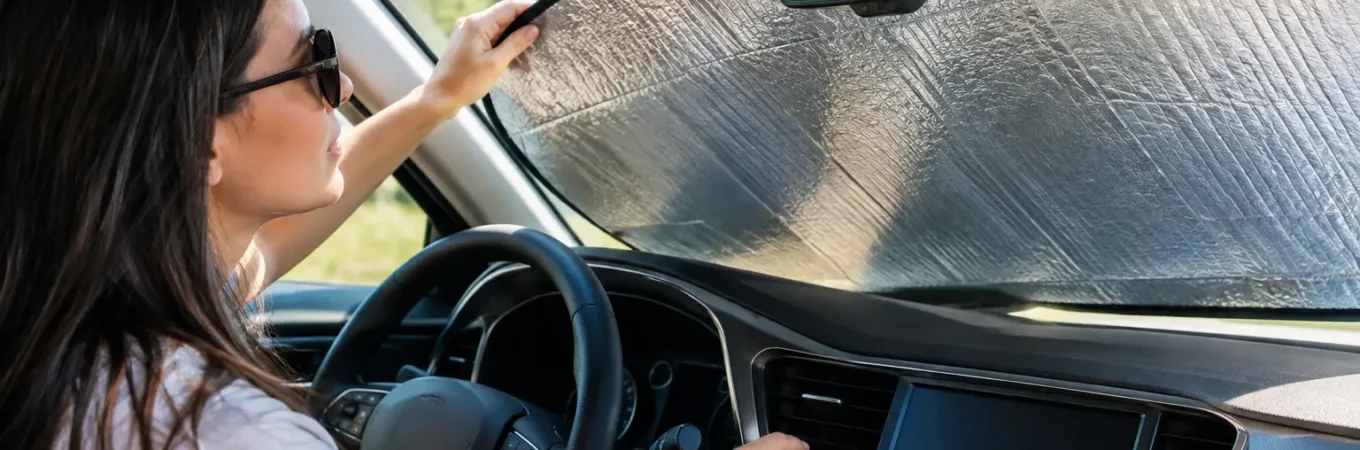
A windshield sunshade is one of the simplest tools for protecting the parts of your cabin that take the hardest hit. It blocks direct sun from the dashboard, steering wheel, center console, and front seats while the vehicle is parked.
The best sunshade is the one you will actually use. A custom-fit shade usually covers more glass and stays in place better, but a quality foldable universal shade is still far better than leaving the windshield uncovered. Keep it within reach, not buried beneath bags or cargo, so it becomes part of your parking routine.
For vehicles that sit outside for long periods, consider side-window shades for rear passengers as well. They can help protect child seats, rear upholstery, and passengers from harsh afternoon sun. Just make sure they do not interfere with your visibility or safe operation of the vehicle.
Build Habits That Reduce Heat and Fading
Window film and sunshades do the heavy lifting, but a few parking habits make a noticeable difference over time. When you have a choice, park in a garage, under a carport, or in the shade. In an open lot, even changing the direction your vehicle faces can reduce direct sun on the dash during the hottest part of the day.
Do not rely on cracking the windows as your main heat solution. It may release some heat, but it does little to block UV exposure, creates a security concern, and can let in rain during unpredictable Tennessee weather. Film and a shade give you more reliable protection.
Keep loose items off the dash and rear deck. Sunglasses, air fresheners, phone mounts, plastic accessories, and papers can leave marks, warp, fade, or become hazards in extreme heat. The rear deck is especially easy to forget, yet it gets constant sun through the back glass.
If you have leather seats, use a cleaner and conditioner made for automotive leather at the intervals recommended by the product manufacturer. Over-conditioning can leave a slippery or greasy feel, so more is not always better. For vinyl, plastic, and rubber, choose a non-greasy interior protectant with UV protection. Avoid household cleaners, oily dressings, and harsh chemicals that can make surfaces shiny, attract dust, or speed up deterioration.
Choose Materials With Sun Exposure in Mind
If you are shopping for a vehicle or updating an existing interior, think beyond color. Leather can look great and is easy to wipe down, but it needs regular care in hot, sunny conditions. Cloth may stay more comfortable in direct heat, though lighter fabrics can stain or discolor. Synthetic leather and vinyl vary widely by manufacturer, so maintenance and sun protection still matter.
Seat covers can help preserve factory upholstery, especially in work trucks, family vehicles, and cars with light-colored seats. The trade-off is fit and breathability. Cheap covers can slide around, trap heat, or wear against the original material. A well-fitted cover is the better choice if you go that route.
Dash covers are another option for older vehicles with existing fading or cracking. They are functional, but they change the look of the cabin and may not appeal to every owner. Preventing damage with tint, shade, and routine care is usually the cleaner solution for a newer vehicle.
Know When Damage Needs More Than Protection
If your dash is already cracking, your leather is peeling, or your headliner is sagging, sun protection will prevent further stress but will not reverse the damage. At that point, professional repair, reupholstery, or trim replacement may be worth pricing out, especially if you plan to keep the vehicle or sell it later.
Do not wait for visible damage before taking action. Fading can be gradual enough that you only notice it when one covered area looks dramatically darker than the exposed section beside it. The earlier you reduce UV and heat, the more of the factory finish you can preserve.
A vehicle does not have to be a show car to deserve protection. If you spend time in it, carry family in it, or want it to hold its value, giving the interior a break from the East Tennessee sun is a smart move. Start with the glass, keep a sunshade handy, and make the next hot parking lot a little easier on both your cabin and your drive home.