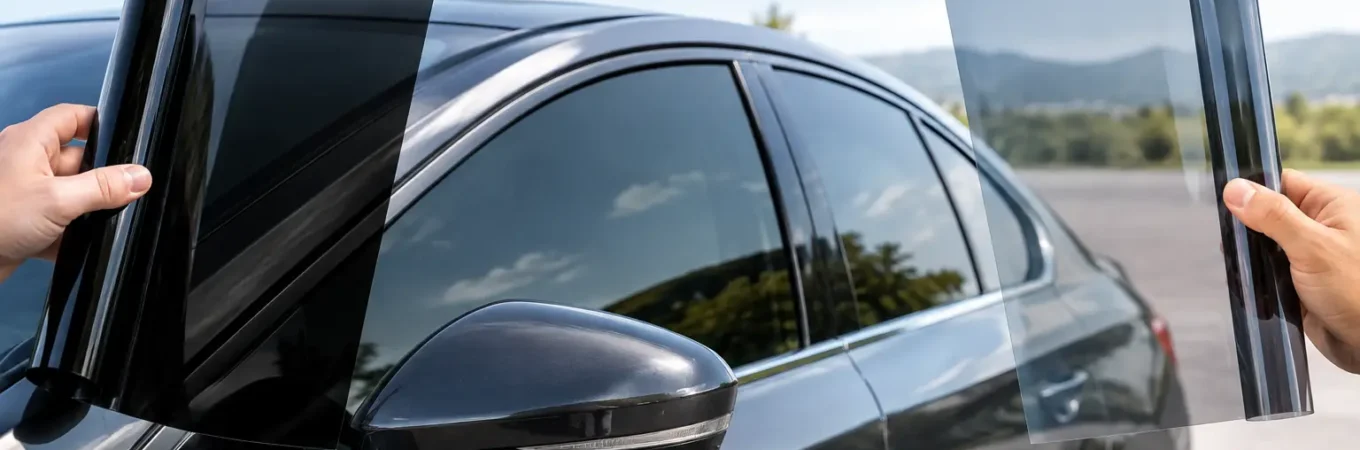
A dark-looking tint job can still leave your steering wheel hot, your A/C working overtime, and your cabin full of glare. That is why the dyed versus ceramic decision is about more than the shade you choose. The right film affects how your vehicle looks, how comfortable it feels on I-75, and how well its interior holds up through East Tennessee summers.
Both options can improve privacy and give your vehicle a cleaner appearance. The difference is what happens after the sun has been beating through the glass for an hour. Dyed tint is the affordable, appearance-focused option. Ceramic tint is built for drivers who want stronger heat rejection, better clarity, and long-term performance.
Dyed Versus Ceramic Tint: The Real Difference
Dyed window tint uses layers of dye to absorb sunlight. It is a familiar choice because it gives vehicles that darker, finished look at a lower price point. For someone who mainly wants privacy, reduced brightness, and an upgraded appearance, dyed film can make sense.
Ceramic tint uses tiny nonmetallic ceramic particles to block heat and infrared energy. It is not simply a darker film. In fact, a lighter ceramic film can reject more heat than a much darker dyed film. That matters if you want to see clearly at night while still getting relief from the sun during the day.
The key point is simple: tint darkness and tint performance are not the same thing. A 20% film may look dark whether it is dyed or ceramic, but the ceramic version will generally do a much better job managing heat and UV exposure.
What dyed tint does well
Dyed film is often the right starting point for a budget-conscious vehicle owner. It improves the exterior look of a car or truck, adds privacy for belongings inside, and helps cut down some visible light and glare. If your vehicle is parked in a garage, used for shorter drives, or primarily being tinted for style, it can be a practical choice.
It is also a good fit when keeping upfront cost low matters most. Professional installation still makes a major difference here. A clean install with properly prepared glass and tight edges will look better and last longer than a cheap, rushed tint job, regardless of film type.
The trade-off is that dyed film absorbs heat rather than rejecting as much of it before it enters the cabin. Over time, lower-quality dyed films can fade, turn purple, or lose some of their original appearance. Better dyed and carbon-style films hold up more reliably, but they generally will not match ceramic film for heat rejection.
What ceramic tint does better
Ceramic film is made for comfort and protection. It rejects a larger amount of infrared heat, reduces glare, and blocks harmful UV rays without relying on metal. For Knoxville drivers dealing with hot pavement, bright afternoon sun, and long commutes, that added heat control is noticeable.
A ceramic tint can help your cabin cool down faster and feel less harsh once you get behind the wheel. It can also reduce the strain on your vehicle’s air conditioning system during the hottest part of the year. While tint will not make a black interior feel cold after hours in direct sunlight, quality ceramic film makes a real difference in how quickly the cabin becomes comfortable.
Because ceramic tint is nonmetallic, it is also friendlier to electronics. Metalized films can sometimes interfere with radio reception, GPS, Bluetooth, cell service, or toll tags. Ceramic film avoids that concern while delivering premium performance.
Ceramic is especially worth considering for people who drive daily, spend time in traffic, have leather interiors, or keep their vehicles for years. It costs more up front, but many customers find the extra comfort every single day makes the upgrade worthwhile.
Heat Rejection Is Where Ceramic Earns Its Price
When customers compare tint options, the biggest question is usually, “Will I really feel the difference?” With ceramic film, the answer is often yes, especially in the front seats where the windshield, side windows, and dashboard collect the most sun.
Visible light transmission, often called VLT, tells you how dark a film appears. A lower VLT number means a darker tint. Heat rejection is a separate measurement. It reflects how well the film limits solar energy coming through the glass. Infrared rejection is another important number because infrared energy is a major source of the heat you feel on your skin.
This is why choosing by darkness alone can lead to disappointment. A very dark dyed film may give you excellent privacy but still allow more heat into the cabin than a lighter, high-quality ceramic film. If your priority is staying cooler, ask about the actual performance level, not just the shade.
For many drivers, a balanced setup works best. A legal shade on the front doors paired with a darker rear section can provide privacy without making nighttime driving uncomfortable. Adding a high-performance ceramic option to the front windows can be a smart move if you feel the sun most on your commute.
Appearance, Night Visibility, and Privacy
Dyed and ceramic tint can both look excellent when professionally installed. The finished appearance depends on the film color, shade, vehicle glass, and installation quality. Some films have a charcoal look, while others can show a slightly different tone in certain lighting. Seeing film samples against your vehicle before installation helps prevent surprises.
Privacy is also more about shade than film technology. A darker dyed film and a darker ceramic film can offer a similar level of privacy from the outside. Ceramic does not automatically look darker. Its advantage is that it can deliver better heat performance while you keep a shade that is comfortable and appropriate for your driving needs.
Do not overlook night visibility. Going as dark as possible may sound appealing, but it can make backing up, checking mirrors, and driving on unlit roads harder. This is particularly relevant for drivers who regularly travel rural roads outside Knoxville. The best tint is one you enjoy in July and can still see through safely on a rainy night.
Cost: Spend for the Reason That Matters to You
There is no single best choice for every vehicle. Dyed tint generally costs less, making it attractive for customers who want a sharp look without stretching their budget. It can be a solid value when installed professionally and chosen from a reputable film line.
Ceramic tint costs more because the material is engineered for higher performance. If your car sits outside at work, you make long daily drives, or heat is the reason you are considering tint in the first place, ceramic often delivers better value over the life of the vehicle.
Think about how you use your vehicle. For a weekend truck, a first car, or a vehicle you may sell soon, a quality entry-level film may be the sensible route. For a new SUV, a luxury vehicle, a work truck, or a family vehicle that sees daily use, ceramic is often the upgrade people wish they had chosen from the beginning.
A Few Details That Matter Before Installation
Quality film deserves quality installation. Even premium ceramic tint can disappoint if the glass is not properly cleaned, the edges are poorly finished, or the installer does not take care around door panels, seals, and electronics. A professional tint shop should explain the film options clearly, prepare the vehicle carefully, and give you realistic curing expectations.
Fresh tint needs time to cure. Small water pockets or a slightly hazy appearance can happen during the early curing period, especially with changing Tennessee weather. Do not roll the windows down until your installer says it is safe to do so. Letting the film cure properly protects the finished result.
Legal tint limits matter, too. Rules can vary by window and can change, so do not assume a shade that looked good on another vehicle is the right choice for yours. A knowledgeable local installer can help you select a setup that balances style, performance, and applicable requirements.
Which Tint Should You Choose?
Choose dyed tint if your main goal is a better look, added privacy, and a lower upfront price. It is a straightforward choice for drivers who want professionally installed tint without paying for maximum heat rejection.
Choose ceramic tint if comfort, heat control, UV protection, signal-friendly performance, and long-term durability are higher on your list. It is the stronger option for drivers who spend real time behind the wheel and want to feel the upgrade, not just see it.
At 865 Tint, the best recommendation starts with how you drive, where you park, and what you want your vehicle to do for you. Bring those priorities to the conversation, compare the film tiers in person, and choose the shade and performance level you will be happy with every time the sun comes out.