
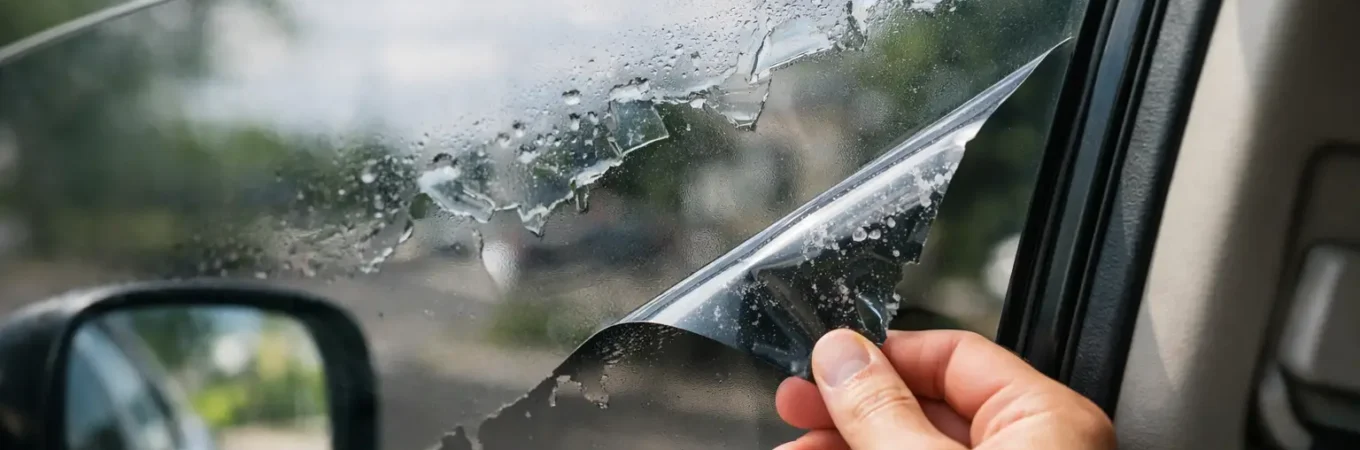
You usually notice failing tint at the worst time – sun hitting the glass just right, headlights glaring through a hazy back window, or a bubbling edge that suddenly becomes impossible to ignore. If you have been wondering about the signs your window tint is failing, the good news is that most of them are easy to spot once you know what to look for.
Good tint should look clean, consistent, and nearly invisible as a material. It should do its job without calling attention to itself. When tint starts breaking down, it stops helping with heat, glare, privacy, and appearance the way it should. On a vehicle, that can make the whole car look older. On a home or business, it can leave windows looking patchy and neglected.
The clearest signs your window tint is failing
Tint does not usually fail all at once. In most cases, it starts with one small issue and gets worse over time. Catching it early can help you decide whether a simple replacement makes sense before the film becomes harder to remove.
1. Bubbling under the film
Bubbling is one of the most obvious warning signs. If you see raised pockets or air-like circles forming between the film and the glass, the adhesive is no longer holding the tint evenly.
A few things can cause this. Cheap film tends to break down faster. Poor installation can leave contamination or weak adhesion points behind. Age and long-term sun exposure can also wear out even older tint that once looked fine.
Small bubbles rarely stay small. They spread, distort visibility, and give the glass a rough, uneven look. On rear windows especially, bubbling can become a safety issue because it interferes with your view.
2. Purple or discolored tint
Black tint should not slowly turn purple. When it does, that usually means the dye in the film is breaking down from UV exposure and heat.
This is common with lower-grade dyed films. The color shift is more than a cosmetic problem. It often means the film is losing performance too, especially when it comes to heat rejection and UV protection.
If your tint looks faded, washed out, or noticeably different from one window to another, it is a strong sign the film has reached the end of its useful life.
3. Peeling at the edges
Tint should sit tight to the glass with smooth, clean borders. If you see corners lifting or edges curling, the film is failing.
Sometimes peeling starts because the film was cut too close, handled roughly, or exposed to repeated wear near the window seals. Other times it happens simply because the adhesive has aged out. Once peeling starts, dirt works its way under the film and makes the problem worse.
This is one issue people often try to ignore, but edge failure tends to spread quickly. What starts as a small lifted corner can turn into large sections separating from the glass.
4. Hazy or cloudy appearance
A good tint job should not make your windows look foggy. If the glass has a milky, blurry, or cloudy look that does not wipe away with cleaning, the film may be deteriorating.
This can happen when the adhesive layer begins to fail or when the film itself starts to break down internally. It is especially frustrating on windshields, side glass, and rear windows where clarity matters most.
Cloudiness is not just an appearance issue. It can reduce visibility in bright sunlight, rain, or at night when glare is already a problem.
5. Scratches, cracks, or surface wear that keep spreading
All tint can pick up some wear over time, especially on frequently used windows. But if the surface is scratched up, flaky, or showing fine crack-like lines, the film may be drying out and failing.
This is more common with old tint and lower-quality products. Repeated rolling up and down of side windows can speed it up if the film was not installed well or if debris has been rubbing against it for years.
A damaged surface often means the tint is no longer giving you the clean look or reliable performance you paid for.
6. Uneven color or patchy sections
When tint starts failing, it does not always look dramatic right away. Sometimes you just notice one area looks darker, lighter, or more blotchy than the rest.
Patchiness can mean the adhesive is separating in spots, the dye is wearing unevenly, or different sections of older film are aging at different rates. On vehicles, this can make the car look mismatched. On residential or commercial glass, it can be even more noticeable from the outside.
If one window looks noticeably different from the others, that is usually not normal wear. It is a sign the film is no longer aging evenly.
7. Less heat and glare protection than before
Some tint failures are visible. Others show up in how the space feels. If your car suddenly feels hotter on sunny days, or a room in your home has more glare than it used to, the film may be losing effectiveness even if it has not fully peeled or bubbled yet.
This is where film quality matters. Better films hold their performance longer, while cheaper products can lose their edge faster under strong sun and everyday use. If the glass looks mostly okay but the comfort level has clearly changed, the tint may still be on the window while no longer doing its job well.
Why window tint fails in the first place
There is usually not just one reason. In real-world conditions, tint failure often comes down to a mix of film quality, installation quality, age, and sun exposure.
Low-grade film tends to fade and discolor faster. Poor installation can trap debris, leave weak adhesion, or create edges that start lifting early. Older tint naturally wears out over time, especially in areas that see plenty of sun and heat. Tennessee summers are no joke, and parked vehicles or sun-facing windows take that stress day after day.
That does not mean every old tint job was bad to begin with. Some film simply reaches the end of its lifespan. But when failure starts early, the cause is often cheap materials or rushed work.
Can you keep driving or living with failing tint?
Sometimes, for a little while. If the issue is mild discoloration and it is not affecting visibility, you may choose to wait. But there is a trade-off.
The longer damaged tint stays on the glass, the more frustrating removal can become. Bubbling film can dry out and break apart during removal. Peeling edges collect dirt and adhesive residue. Hazy film can make everyday driving more annoying than people realize until it is gone.
For homes and businesses, failing tint can also work against the appearance of the property. Instead of adding privacy and comfort, it starts looking dated and poorly maintained.
When replacement makes more sense than repair
Tint is not usually something you patch. Once film starts failing, replacement is usually the better move.
If the problem is limited to one piece of glass, replacing that section may be enough. If multiple windows are bubbling, fading, or peeling, it often makes more sense to remove and retint everything so the look and performance match again.
This is also a good time to upgrade. If your current tint is older dyed film, switching to carbon or ceramic can improve heat rejection, color stability, and long-term value. It depends on your goals. Some people mainly want privacy and appearance. Others care more about interior protection and heat control. The right film choice should match how you use the vehicle or space.
Professional removal matters more than most people think
Old tint can be stubborn. Trying to rip it off yourself may leave glue behind, damage defroster lines, or turn a straightforward job into a long cleanup.
Professional tint removal is about getting the glass clean and ready for new film without creating extra problems. That matters on rear windows, large residential panes, and any glass where visibility and finish count. A clean removal sets up a clean reinstall.
If you are seeing the signs your window tint is failing, it is usually better to deal with it before the damage spreads further. Fresh tint should make your vehicle, home, or business feel cooler, look sharper, and work the way it is supposed to. If your current film is doing the opposite, that is your cue to stop putting up with it and get it handled right.