
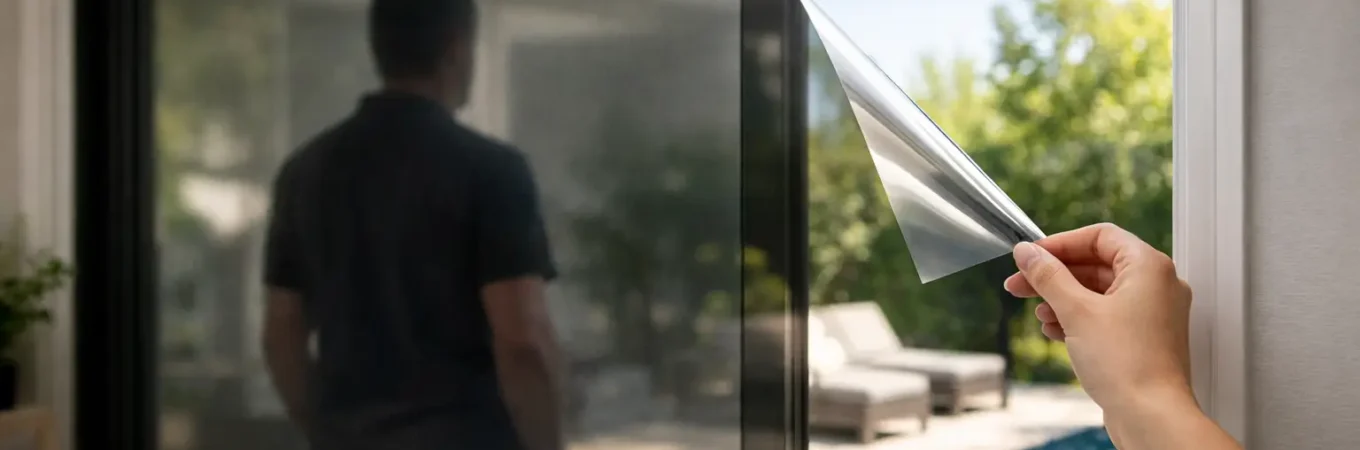
If your living room feels like a fishbowl every time the sun goes down, you are not imagining it. A lot of homeowners start looking into home window tint for privacy after realizing blinds and curtains solve one problem while creating another – they block the view, darken the room, and usually stay closed more than anyone wants.
Privacy film gives you a different option. Done right, it helps limit what people can see from outside while still letting your home feel open, bright, and comfortable. The key is choosing the right type of film for the way your house actually sits, how much natural light you want to keep, and whether you need daytime privacy, round-the-clock privacy, or a balance of both.
What home window tint for privacy actually does
Privacy window tint changes how glass looks from each side. In the right conditions, it makes it harder for people outside to see in while you keep your view out. That is why it is popular for street-facing windows, front doors with glass, bathroom windows, home offices, and any room where you want more privacy without shutting the place up with heavy coverings.
There is one detail that matters more than most people expect: light balance. Many privacy films work best during the day, when it is brighter outside than inside. When the sun is out, reflective or darker films can make it much harder for someone outside to see into your home. At night, if your lights are on and it is dark outside, that effect can drop off. That is not a flaw in the film. It is just how glass and lighting work.
So if you are shopping for privacy, the real question is not just, “Do I want tint?” It is, “When do I need privacy most?”
Daytime privacy vs all-day privacy
This is where homeowners can make a bad choice if they only look at photos online. A film that looks perfect in a bright product picture may not give you the same result after sunset.
Daytime privacy film is a strong fit for homes that get a lot of street traffic during daylight hours. Reflective films and certain darker films can cut visibility from the outside while also helping with glare and solar heat. For many homeowners, that checks more than one box at once.
All-day privacy is a different conversation. If you want privacy at night with interior lights on, tint alone may not fully handle it. Frosted and decorative films can obscure views around the clock, but they also block clear visibility through the glass. That works well for bathrooms, sidelights, entry glass, or certain office spaces, but it is usually not what people want on a big living room window where they still want to see outside.
That trade-off matters. Some homeowners want maximum privacy no matter what. Others would rather keep their view and accept that they may still use shades after dark. The best choice depends on the room.
Where privacy tint makes the biggest difference
Not every window in a home needs the same film. In fact, treating every piece of glass the same way can leave you with rooms that feel darker than they need to be or windows that still do not solve the actual privacy problem.
Front-facing windows are usually the first place people notice the need for privacy. If your couch, dining room, or office faces the street, a privacy film can make the space feel a lot less exposed during the day. It also helps if you have large windows that bring in glare along with all that natural light.
Bathrooms are another common spot, but this is where the film type matters even more. A frosted or obscure film is often the better fit because it gives more reliable privacy at any hour. For bathroom glass, clear outward views are usually less important than comfort and coverage.
Bedroom windows can go either way. Some homeowners want a softer, tinted look that reduces visibility from outside during the day. Others need a stronger solution because nearby homes sit close together. That is why a professional recommendation is useful. The same product will not fit every layout.
Sunrooms, kitchens, and glass-heavy entry areas also benefit from privacy tint, especially when the goal is not only privacy but also heat and glare control. In East Tennessee, that combination matters. A room that gets hammered by afternoon sun can feel hotter, brighter, and more exposed all at once.
Choosing the right film for your home
The best home window tint for privacy usually comes down to three things: appearance, performance, and how much light you want to keep.
If you want a cleaner exterior look and stronger daytime privacy, reflective film is often the first option people consider. It can be very effective during the day and has the added benefit of reducing glare and solar heat. The trade-off is that reflective films change the outside appearance of the glass more noticeably.
If you want a more subtle look, neutral or lightly tinted films may be a better fit. These can still help with privacy and comfort, but the effect may be less dramatic depending on lighting conditions and film shade.
If the goal is obscured visibility rather than a tinted view, frosted film is the straightforward choice. It is especially useful for bathrooms, sidelights, office partitions, and entry glass. It does not give you a clear outward view, but it does give dependable privacy.
Some homeowners also care just as much about heat and UV protection as privacy. In those cases, premium film options can make more sense than the cheapest basic film. Better products often provide a stronger overall result with less compromise on light transmission, appearance, and longevity.
Why professional installation matters
Window film looks simple until it is halfway applied and full of dust, creases, or trapped moisture. Home windows are less forgiving than people think, especially larger panes and specialty glass.
Professional installation matters for appearance, but it also matters for performance. A clean install helps the film sit right, cure correctly, and last longer without lifting at the edges or showing obvious flaws in direct sunlight. If the goal is to make your home feel more polished and private, sloppy film can do the opposite fast.
There is also the issue of glass compatibility. Not every residential window should be treated the same way, and using the wrong film on the wrong glass can create problems. A professional installer can help you avoid guessing and match the film to the actual window type and room conditions.
That is especially useful when your goals overlap. A lot of homeowners are not only trying to add privacy. They also want less heat, less fading on floors and furniture, and a more comfortable room during peak sun hours. A good installer helps you choose a film that solves the real problem instead of just selling the darkest option.
What homeowners get wrong about privacy tint
The biggest mistake is expecting one product to do everything perfectly. No film can give you an open daytime view, complete nighttime privacy, maximum brightness, and zero change to the glass appearance all at once. There is always some give and take.
Another common mistake is picking film based only on darkness. Darker does not always mean better privacy, and it definitely does not always mean better performance. The right film depends on the room, the angle of the sun, the distance to neighbors, and whether your main concern is visibility, heat, glare, or all three.
Some homeowners also wait too long to address problem windows because they assume curtains are the only realistic answer. But if you are tired of keeping blinds shut just to feel comfortable in your own home, film is often the more practical fix.
Is home window tint for privacy worth it?
For many homeowners, yes – especially when privacy is only part of the issue. If your windows also bring in harsh sunlight, interior fading, and uncomfortable heat, tint gives you more value than a basic privacy solution alone.
The best results come from being honest about what you want the glass to do. If you want daytime privacy and lower glare, that is very achievable. If you want full-time privacy in a bathroom or entry area, that is also achievable with the right film. If you want total privacy at night in a living room while keeping a clear view outside, that usually means combining film with shades or curtains.
That is not a downside. It is just the real-world answer.
For homeowners around Knoxville, working with a local tint specialist like 865 Tint can make the process a lot easier because you can get guidance based on your home, your windows, and the look you want instead of trying to guess from a sample photo online.
The right privacy film should make your home feel more comfortable the minute it is installed. You should be able to enjoy the light, keep more of your view, and stop worrying so much about who is looking in.