That darker look might be exactly what you want for privacy, heat reduction, and style, but window tint laws explained in plain English can save you from a ticket, a failed inspection, or paying twice for the same job. A lot of drivers assume tint is just a matter of preference. It is not. Every state sets its own rules, and the details can change what is legal on your windshield, front doors, back glass, and even the type of film you choose.
Why window tint laws matter before you book
Most people start with the benefits. They want less glare on the morning commute, better UV protection for the interior, cooler cabin temps in summer, or a cleaner overall look. Those are all good reasons to tint your vehicle. The problem starts when someone chooses film based only on appearance and never checks the legal limit.
If the tint is too dark for your state, you may end up removing it and starting over. That means extra cost, wasted time, and the risk of damage if the removal is done poorly. Good tint work should look clean and last. Good planning starts before the film goes on.
There is also a practical difference between what looks dark and what measures dark. Two vehicles can appear similar from the outside, but one may still be legal and the other may not. That comes down to visible light transmission, usually called VLT.
Window tint laws explained: the basic terms
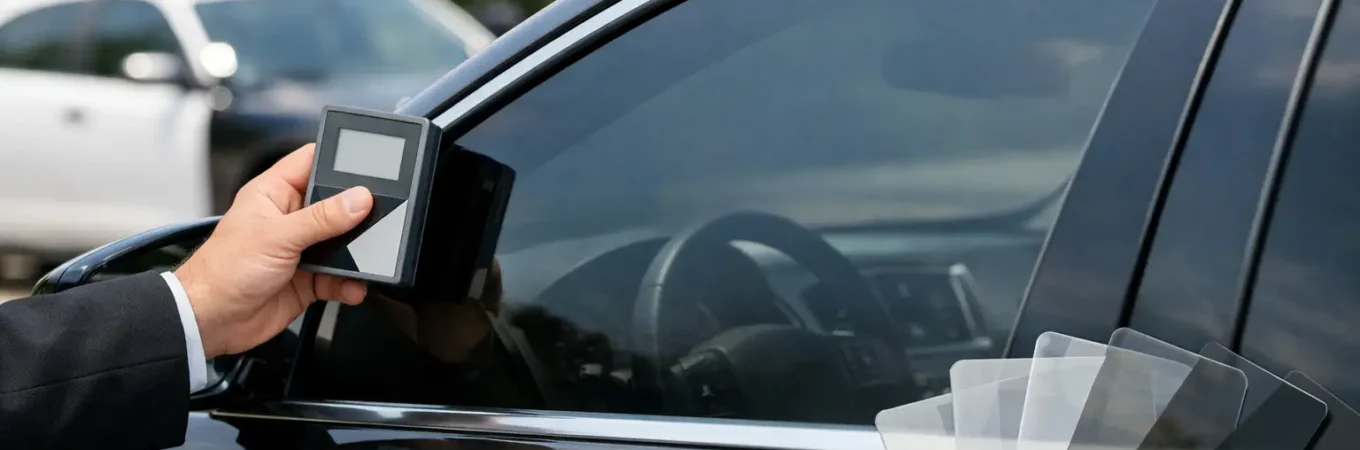
The main number you need to understand is VLT. This tells you how much visible light passes through the glass and film together. A higher percentage means a lighter tint. A lower percentage means a darker tint.
For example, 50% tint lets in more light than 20% tint. That sounds simple, but the catch is that your factory glass already has some shading. When aftermarket film is added, the final reading is based on the combined glass and film, not just the film box label.
That is where people get tripped up. They buy a film that sounds legal on paper, then install it on factory glass and end up below the legal limit. If you want to stay compliant, the full setup matters.
You also need to know that states usually separate rules by window position. Front side windows often have the strictest limits because they affect visibility and officer interaction during traffic stops. Rear side windows and back glass may be more flexible, especially on SUVs and vans. Windshield rules are usually the tightest of all.
The windows that get the most attention
Windshield tint
Windshield tint is where many legal issues start. In most states, full windshield tint is heavily restricted or only allowed with very light film. Some states permit a non-reflective strip across the top, often called an AS-1 strip or visor strip. Others may allow more under medical exemptions, but that is not automatic.
This is one of those areas where “it depends” matters. A light ceramic windshield film may help with heat and glare while still keeping good visibility, but legal approval still depends on your state rules. The fact that a film improves comfort does not make it street legal everywhere.
Front door windows
Front side windows are the most common source of tickets because they are easy to measure and closely regulated. If your state requires a lighter film on the front doors, that rule usually applies no matter how dark you want the rest of the vehicle.
Drivers who want a balanced look often have to compromise here. The best answer is usually choosing a quality film that performs well on heat rejection without going too dark. Better film can give you comfort and a clean appearance even when legal limits keep you from the darkest shade.
Rear side windows and back glass
These windows are often more flexible, but not always. Some states allow darker tint on rear glass, especially for multipurpose vehicles. Sedans may be treated differently than SUVs or trucks. This is why copying a friend’s setup is a bad plan. What is legal on one vehicle type may not be legal on yours.
State laws are not all the same
There is no one-size-fits-all national tint rule for passenger vehicles. Tennessee has its own standards. So does every neighboring state. If you drive across state lines regularly, that can create confusion fast.
A setup that is compliant where you live may still attract attention elsewhere, especially if it looks unusually dark. Enforcement also varies. Some areas are strict. Some are more relaxed until there is another reason for a stop. That does not change the law, but it does change how often people run into problems.
For East Tennessee drivers, the smartest move is to choose a setup that fits Tennessee law first and still makes sense for how you use the vehicle. If you commute daily, travel often, or want windshield film, this is worth getting right the first time.
Reflectivity, color, and other rules people forget
When people hear “window tint laws explained,” they usually think only about darkness. But some states also regulate reflectivity. Highly mirrored film may be limited even if the VLT number seems acceptable. That is because reflective tint can affect other drivers and law enforcement visibility.
Some states also restrict certain tint colors. Red, blue, or amber tones may not be legal depending on where you are. Decorative film and specialty looks can be appealing, but legal use on road vehicles is more limited than many drivers realize.
Then there are equipment requirements. Some states require dual side mirrors if the rear window is tinted below a certain level. Others require stickers or certificates showing the tint complies with state law. These details do not get much attention until someone fails an inspection or gets cited.
Medical exemptions are real, but they are not a free pass
Medical exemptions do exist in some states for drivers with qualifying conditions that make light sensitivity a serious issue. But this is not as simple as saying you need darker tint for comfort.
Usually, there is a process. It may involve physician documentation, state approval, and specific limits on what is allowed. Even with an exemption, there can still be restrictions on reflectivity, windshield coverage, or required paperwork kept in the vehicle.
If you think you may qualify, check the official state requirements before making a film choice. Guessing here can get expensive.
Why professional installation still matters for legal tint
Even if you choose a legal film percentage, the job can still go wrong if the installation is poor. Creases, contamination, edge lift, and bad film matching make the vehicle look worse and can shorten the life of the tint. On the legal side, sloppy work can also make it harder to verify what was installed.
A professional tint shop should be able to explain your options clearly, talk through legal limits, and help you choose a film that gives you the performance you want without crossing the line. That matters even more when you are comparing carbon, entry ceramic, ceramic IR, or premium ceramic films. Better film technology can often give you stronger heat rejection and UV protection at a lighter, more compliant shade.
That is usually the smarter move than chasing the darkest possible look.
The trade-off most drivers have to make
Here is the honest answer: the darkest tint is not always the best tint. If you want maximum privacy, your legal choices may feel limited on the front windows. If you want the coolest interior possible, a high-quality ceramic film at a legal shade may outperform a cheaper dark film that gets you pulled over.
That trade-off is where expert guidance helps. Some customers care most about appearance. Others care more about heat control, interior protection, or daytime glare reduction. The right setup depends on what matters most to you, your vehicle type, and the law where you drive.
A good local shop will not just sell you film. They will help you avoid a setup you regret.
How to stay on the safe side
If you are planning to tint your vehicle, start by checking current state rules for your vehicle type and each window position. Ask how the final VLT is measured with your factory glass. If you want windshield tint, ask specifically what is legal, not just what is popular.
Then choose film based on both performance and compliance. That is where many drivers in Knoxville and the surrounding area benefit from working with a shop that handles tint every day and can explain the differences without overcomplicating it. 865 Tint sees this firsthand – customers usually want the same thing: a clean look, real heat reduction, and no surprise issues later.
The best tint job is not the one that looks good for a week. It is the one you still feel good about months later, when the film performs well, the install still looks sharp, and you are not worrying every time you see blue lights in the mirror.